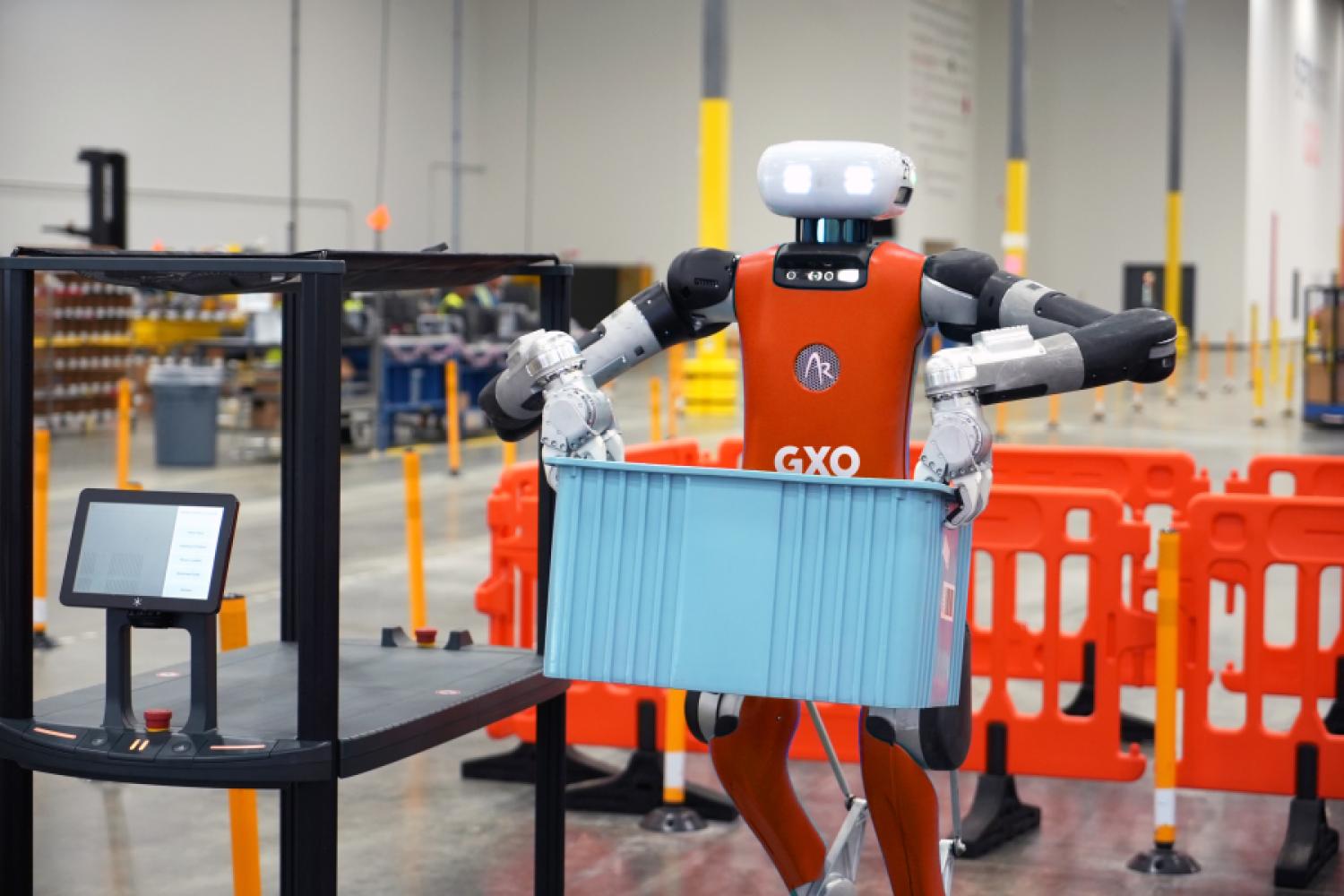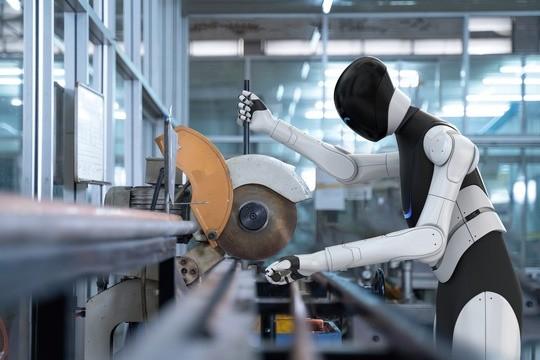
Humanoid robots are considered the next major innovation in robotics. China plans mass production, and companies in the USA and Europe are investing heavily. The new position paper by the International Federation of Robotics (IFR) sheds light on opportunities, trends, and limits according to the press release from August 14.
"Futuristic-looking humanoid robots working in our homes, businesses, and public spaces fascinate people," says Takayuki Ito, President of the IFR. Since the world is tailored to the human body, the idea of a universal helper is obvious. However, it is unclear if and when widespread use will be achieved. Humanoids are meant to complement existing robot types, not replace them. In which areas humanoid robots are already being used and for which tasks they are suitable, is explained in LOGISTIK HEUTE
in the cover story issue 7–8/2025.
Global Deployment Varied
In the United States, tech companies like Nvidia, Amazon, and Tesla are intensively working on AI and robotic technologies. Besides military funding, this development is also supported by numerous private investments. This leads to a significant start-up scene specializing in humanoid robots. The interest in humanoids is particularly high in industries like logistics and manufacturing. Humanoid robots are seen less as social companions and more as tools to help increase productivity and efficiency. Therefore, the focus is more on practical applications and less on integrating robots into daily social life.
In China, humanoids take a central position in the national robotics strategy. The government wants to demonstrate competence and global competitiveness in this technological field. The focus of use is in the
service sector, such as customer support. The automation of production lines in manufacturing and the use of humanoids to be less dependent on human labor seems only secondary. A core element of the Chinese strategy is building a scalable supply chain for key components.
Japan is a pioneer in the development of humanoid robots. An early example was Honda's Asimo, introduced in October 2000. Robots in Japan are seen more as companions rather than mere tools. Consequently, humanoid robots like Pepper and Palro are primarily designed as social robots and are used in educational institutions, shops, and elder care facilities. This orientation reflects the demand of an aging society, which Japan is facing. An important focus of the projects is on robots that can live harmoniously with people and are accepted
as part of society. Leading companies like Kawasaki are developing humanoid robots as a research platform.
In Europe, great emphasis is placed on the ethical implications of robotics and AI. The focus is on collaborative robots that work with humans in industrial environments. Core topics are improving safety and efficiency and mimicking human abilities. Compensating for human labor is not the focus. Instead, the emphasis is on human-centered design and the social and societal impacts of robots. European companies are generally more cautious about the use of humanoids when it comes to short- to medium-term automation tasks in the manufacturing and service sectors.
Outlook
Thanks to their adaptability, humanoids could take on complex tasks where today's robots reach their limits. However, massive everyday deployment is not expected in the short term.