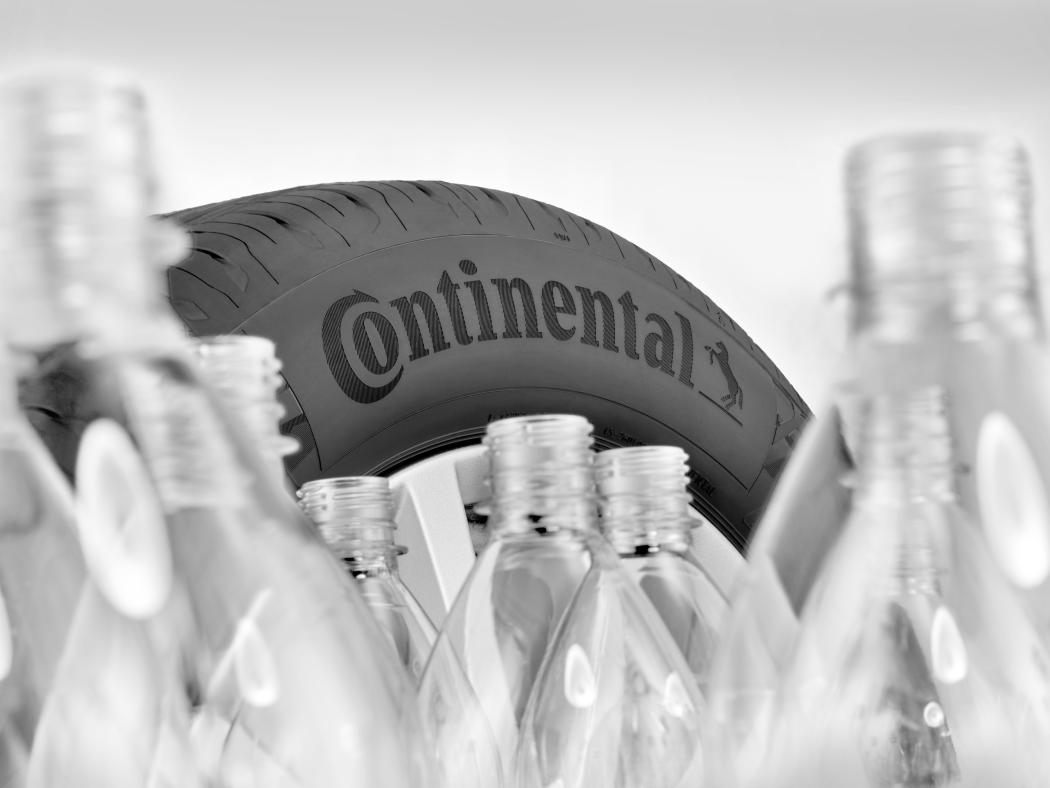
The tire manufacturer Continental has announced that it will steadily increase the share of renewable and recycled materials in its tires. The goal is to use at least 40 percent sustainable materials in production within the next five years. In 2024, the share was already 26 percent on average according to the manufacturer. With this development, the company pursues a clear course toward a circular economy and also involves its suppliers more strongly
in the development of environmentally friendly raw materials.
The focus is especially on materials that contribute to the reinforcement of the tire – for example steel cords and textiles. Continental increasingly uses recycled steel as well as polyester yarns from recycled PET bottles. With the company’s own "ContiRe.Tex" technology, a yarn is produced that is obtained from used PET bottles without chemical intermediate steps. Depending on the tire size, up to 15 bottles
per tire can be recycled in this way.
COKOON Bonding Technology
In addition to material innovations, Continental also relies on more sustainable production methods. One example is the COKOON Bonding Technology, developed together with the company Kordsa. It replaces conventional, potentially environmentally harmful binders such as resorcin and formaldehyde with a more environmentally friendly system for bonding textile reinforcements with rubber compounds. This technology is intended to be available to the entire industry
as an open-source solution.
Dr. Matthias Haufe, head of materials development and industrialization in Continental's tire division, emphasizes the importance of sustainable alternatives across all raw material groups. In addition to recycled steel and PET yarns, there are also biobased resins, silica from rice husks, and synthetic rubber from used cooking oil. By combining these measures, Continental aims to further improve both the environmental aspects and the performance of its products. (Source: Continental)