For the 22nd time, GS1 Germany awarded the “Efficient Consumer Response Award” on 29 September in Bonn, short ECR Award. Projects with exemplary character for outstanding strategic and cross‑company collaboration and optimal value creation to meet customer needs were once again honored, according to a press release. In keeping with the ECR concept, the jury — consisting of representatives from industry, trade, science and media — selected three collaborations that, in their view, all promise better, faster and cheaper solutions from the customer's perspective.
The three winning teams prevailed in a live pitch ahead of the ceremonial awarding against a competitor team in the different categories. On the eve of the “ECR Day” of GS1 Germany, the coveted award was now presented at a gala at the Kameha Grand Bonn. The award was given for the industry leaders in the categories “ECR Collaboration Excellence”, “ECR Innovation Excellence” and “ECR Sustainability Excellence”.
ECR Collaboration Excellence Award: E2E Automation of the O2C Process
Bünting, Dachser, Markant, Nestlé, Procter & Gamble and Rossmann have, according to the press release, committed themselves for several years to the end-to-end automation of the Order-to-Cash process. Always in focus: from complexity to clarity while taking existing standards into account. The joint undertaking aims to connect industry and trade in terms of real-time data, machine-readable claims, workflow integration and transparency in goods receipt in a completely
new way. And this from the development of the first prototype through market-ready solutions to rollout.
The software product “Digitale Vorgangsakte” (DVA) – an open, cloud-based system for all partners in the supply chain that serves the digitization and automation of the claims process. In 2025, according to the cooperation partners in the project, around one million deliveries from about 3,000 suppliers to more than 25 locations will have been processed via the DVA and thus visualized and editable at the shipping unit number (NVE) level based on the Despatch Advice (DESADV).
Documents, photos and information can thus be captured in real time and digitally transmitted via the so-called Claim Handling Portal as a central touchpoint machine-readably in the Receiving Advice (RECADV). Another data source is the platform “Cloud4Log” (C4L), which is intended to render paper delivery notes obsolete. Per claim, savings of up to 100 minutes are possible, it is said. The jury was impressed by the innovativeness, scalability, interoperability, efficiency and the AI potential.
ECR Innovation Excellence Award: Fresh logistics for urban supply
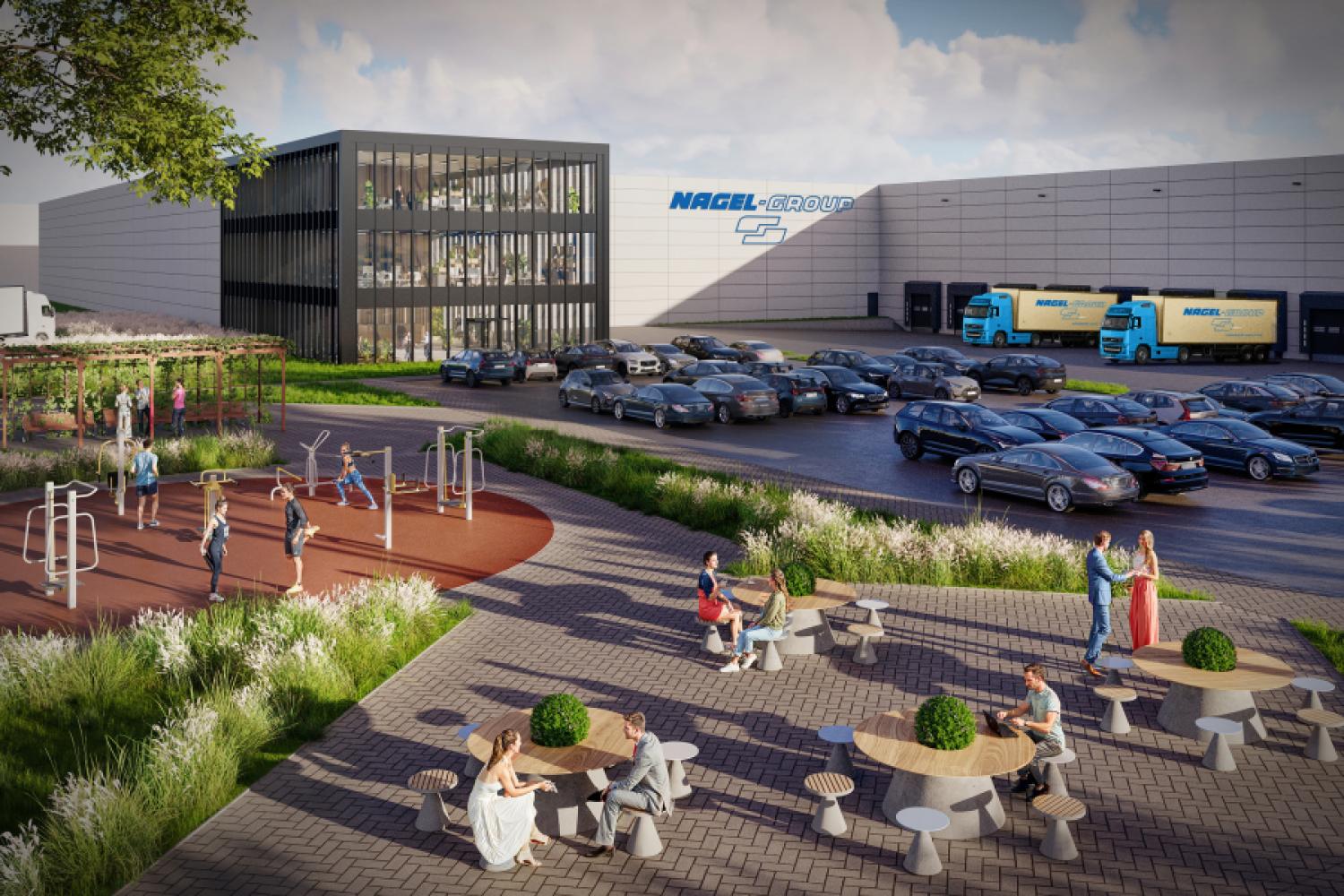
EatFresh, the European EPC Competence Center (EECC), the Nagel Group with its subsidiaries B+S Logistik and LEAFR, and the Bünting Group have rethought fresh logistics. The goal of the project consortium is the development of a standardized, digital and urban provisioning system using Radio Frequency Identification (RFID), the GS1 Smart-Box as a reusable
container, and real-time data on stock, freshness and transport history via Electronic Product Code Information Services (EPCIS).
In close, agile and co-creative collaboration, full transparency along the supply and cold chain from production through storage and transport to the point of sale should be enabled, as well as shrinkage and packaging waste minimized. Particularly innovative is the sovereign data exchange, in which the partners control their data independently and share it with each other via interoperable interfaces, according to the press release. This, according to this year’s ECR Award jury, creates trust, efficiency and scalability for the entire industry.
Currently, the project is in an advanced pilot phase. RFID product tagging and GS1 Smart Boxes together with the Global Returnable Asset Identifier (GRAI) have already been implemented in procurement; first logistical test runs as well as the setup of the RFID reading infrastructure and temperature tracking have started. In addition, the cross-functional project team has jointly developed technical standards, reusable loops and data interfaces to ensure the required speed of implementation and depth of solution for practical deployment. The EPCIS interfaces are being integrated and, at the same time, a field trial is running in the Lab in Frankfurt am Main with over 100 functional tests within a year.
ECR Sustainability Excellence Award: EUDR Best Practice Standard
Representing more than 40 companies and 150 experts from the Data
for Sustainability program (D4S), Alnatura, Dr. Oetker, Edeka, Henkel, Markant, Nestlé, Procter & Gamble and Rewe, supported by KPMG, KPMG Law and Cattwyk, have developed a Best-Practice Standard for the EU Deforestation Regulation (EUDR) for querying and sharing relevant data. This, according to the project partners, enables data flows along the entire supply chain to be exchanged more efficiently and effectively in coordination with the EU database system “Traces.” Using a standardized questionnaire model for Supplier Compliance Verification, the standardized data points and processes can be mapped in three different scenarios targeted, automated and scalable for all conceivable companies.
The EUDR Best-Practice Standard is based on a broad knowledge base created through contributions from retail and consumer goods companies, solution partners, law firms and inputs from the German authorities responsible for oversight within D4S. These diverse practical perspectives have from the outset created a comprehensive requirements profile and persuaded the jury sustainably. Not least because the open-source solution can be applied across companies in different software solutions and is already in use with some providers.
At the outset of the multi-stakeholder project, achieving a seamless understanding of the legal requirements was paramount. Increased transparency, improved data comparability and high relevance of topics led to broad acceptance. The aim was to cover as many use cases as possible of the affected raw material and product categories through a simplified