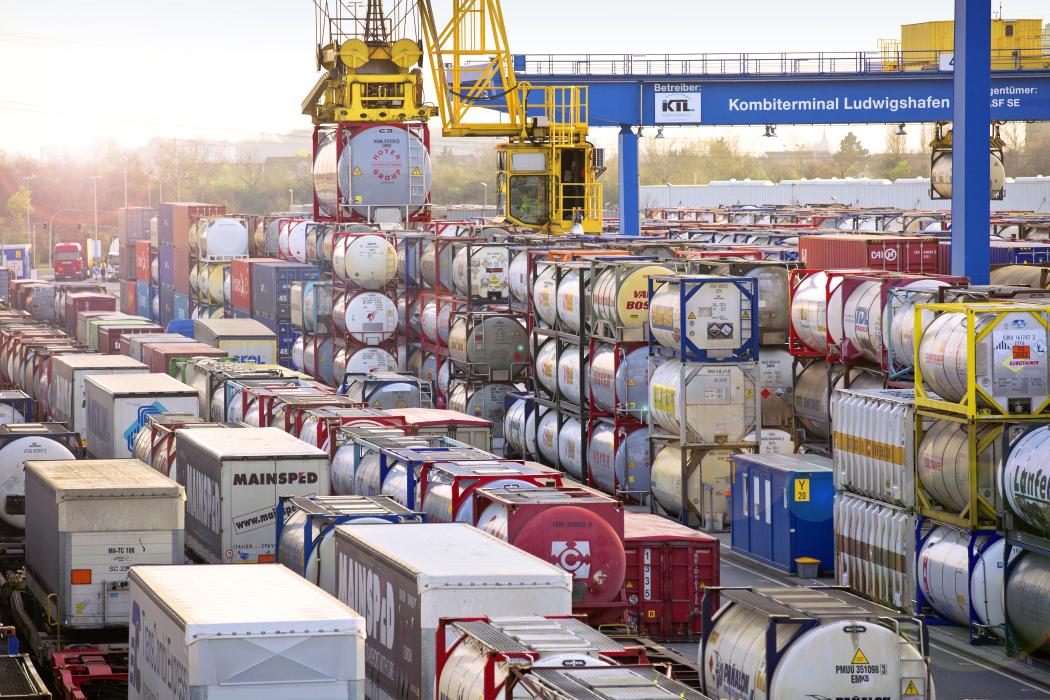
Many freight forwarders are facing difficult decisions in light of the current operational and network situation in rail freight transport. Increasingly, transports that have been handled intermodally so far are coming under pressure. Kombiverkehr KG thus sees an urgent need for action – and refers to concrete proposals from the expert forum for climate-friendly mobility and infrastructure (EKMI) that the federal government must now swiftly implement to keep combined transport economically viable for freight forwarders.
Freight forwarders need predictable, affordable transport routes
The company points out that the planned total closures on central routes in the network of DB InfraGO as well as the inadequately qualified infrastructure in many places have direct impacts on the intermodal pre- and post-haulage. This results in cost risks and operational uncertainties for freight forwarders.
“The current catastrophic network quality leaves no time for delay,”
explains Kombiverkehr managing director Heiko Krebs.
Without short-term reliefs – such as an exemption from tolls for pre- and post-haulage or compensation payments for detours – many transportations threaten to shift back to the road, according to Krebs. This would be a setback in traffic and climate policy objectives and a concrete problem for many freight forwarders who have relied on a functioning link between road and rail.
Political levers are on the table
Just recently, the EKMI, a committee from science and industry appointed by the Federal Ministry of Transport, presented its recommendations for the climate protection program in the transport sector. In rail freight transport, the report addresses central demands of intermodally operating logistics companies. These include a reform of track prices, financial compensation for additional costs due to construction-related diversions, a reduction of electricity tax in rail
transport, and an exemption of pre- and post-haulage in combined transport from the truck toll.
Heiko Krebs assesses these measures as “significant projects with a strong lever effect to strengthen intermodal transport, shift transport volumes to the rail, and thus act particularly climate-friendly.”
From a freight forwarder's perspective, these are steps to restore planning certainty, price stability, and reliability in combined transport.
Competitiveness must be ensured
Many freight forwarders calculate their transports along clearly defined cost and time frames. If short-term changes in the schedule occur due to construction work, diversions, and lacking tracks, intermodal transport falls behind. At the same time, new toll regulations and high energy costs increase the burdens in road freight transport.
Kombiverkehr warns that intermodal transport solutions will lose their competitiveness without political reinforcement.
“Combined transport must become more affordable, more powerful, and significantly more
attractive again. Only then does the environmental benefit really pay off,” says Krebs.
Freight forwarders between transformation pressure and everyday reality
Although the transformation of freight transport is a declared goal of the federal government, in practice, many freight forwarders are experiencing increasing complexity and decreasing reliability, especially when relying on rail connections. However, to achieve the necessary CO2 reduction in the transport sector, according to Kombiverkehr it is not enough to rely on long-term effects. The short-term operational reality of freight forwarders must be taken into account more strongly in all measures.
Intermodal network structures at a European scale
Kombiverkehr operates a European network with more than 15,000 connections per night. In 2024, the company handled around 770,000 truck shipments by rail. The company is backed by around 230 freight forwarders and transport companies as well as DB Cargo