According to current surveys by ADAC and the automobile club Mobil in Germany, nearby auto parks are on average up to 20 percent cheaper than service stations directly on the highway. With a 50-liter fuel fill-up combined with typical travel shopping, price differences can sum up to more than 30 euros.
The ADAC analysis was conducted between April 12 and 27, 2025. Fuel prices at 50 highway service stations and at 50 service stations at the nearest exit were examined. On average, the price for a liter of Super E10 at service stations was 43.7 cents higher than at auto parks, and for diesel 42.5 cents higher. The highest determined price difference for Super E10 was 57 cents per liter.
According to ADAC, this results in an average saving of almost 22 euros for a 50-liter fill-up of Super E10 and a good 21 euros for diesel.
Significant differences also in the shop
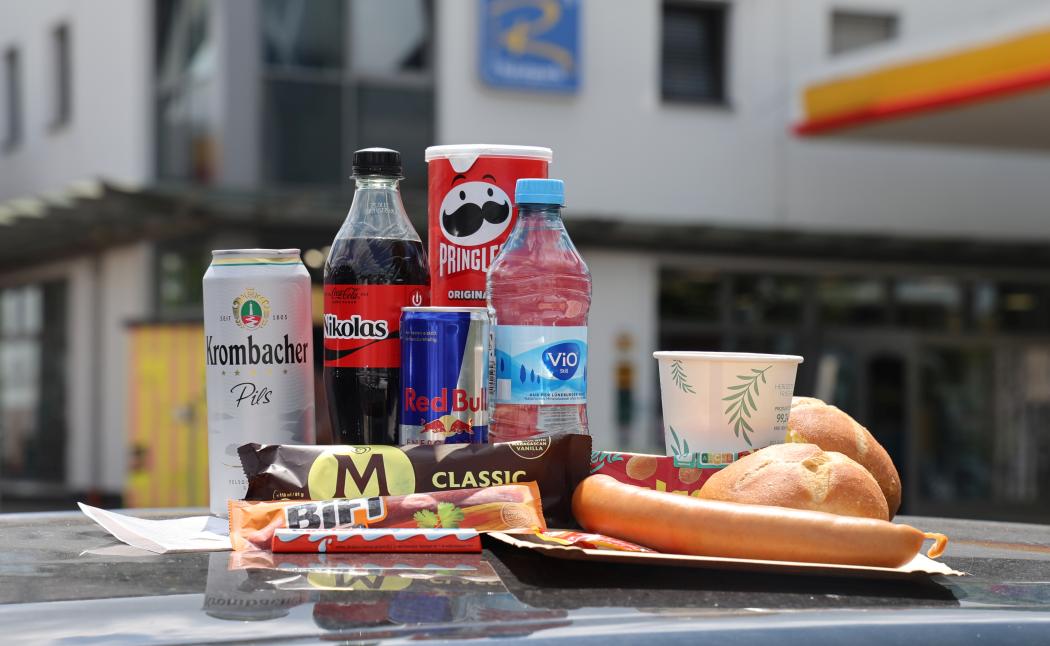
Mobil in Germany additionally compared the prices of a standardized basket of goods with typical travel products in early August 2025. The average price at service stations was 43.45 euros, at auto parks 36.20 euros. Individual products showed markups of up to 300 percent. For instance, still water at the service station cost up to 3.99 euros, at the auto park 1.00 euro.
Mobil in Germany also recorded fuel prices. In June 2025, the automobile club analyzed prices for E5, E10, and diesel over five days at
three times of the day using the Clever Tanken comparison portal. For 50 liters of diesel, drivers paid 103.13 euros at service stations, 80.91 euros at auto parks. The average price difference for diesel was thus around 27 percent. In total, 2025 saw an average total difference between auto parks and service stations for the basket of goods and fuel of 29.48 euros.
Structural reasons for high prices
According to the Association of German Auto Parks (VEDA), the higher prices at highway service stations are due to long-term concessions to a few operators. This leads to a low-competition market structure. In contrast, auto parks are mainly operated by medium-sized companies and are subject to free competition.
"What we see here
is a prime example of how market concentration leads to disadvantages for consumers," explains Ruscheinsky. "Our auto parks, on the other hand, are medium-sized, customer-oriented, and open – also for innovations, new operators, and fair competition."
Call for more competition and charging infrastructure
The VEDA calls for more transparency and fair competitive conditions from politics. According to the association, this includes better signage of auto parks along the highway and the promotion of genuine consumer choices.
Another advantage of auto parks, according to VEDA, lies in the charging infrastructure for electric vehicles. On average, auto parks have ten times as many fast-charging points as federal service stations. Specifically, the association mentions a ratio of 10:2 in favor of auto parks.