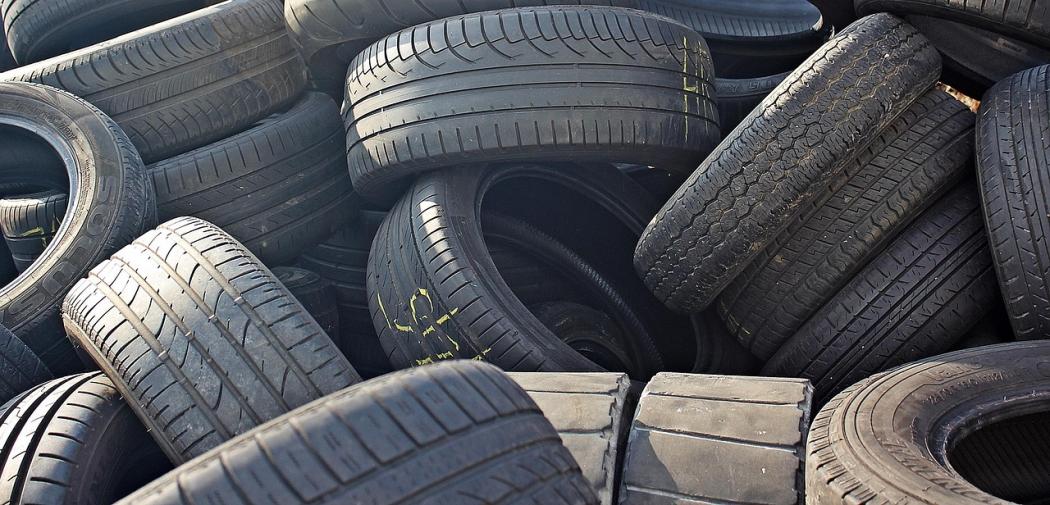
Of the approximately 600,000 tons of used tires recorded in Germany annually, an increasing number are attributed to so-called seal and silent tires. These costly special developments can seal themselves in the event of tire damage due to their special construction or reduce noise pollution inside the passenger compartment. However, the initiative Zare (Certified Used Tire Disposal), represented by the Willich-based communication agency CGW GmbH, has long warned against such rubber compounds due to the greater effort involved in further processing.
Careful Distinction Necessary
Of the total amount of used tires in Germany, about four percent, or 2,400 tons annually, are attributed to noise-reducing or self-sealing tires. And these models are increasingly gaining popularity, according to Zare. For years, the association has been informing about the used tire issue from 29 locations in Germany and the Netherlands. To ensure that used tires end up in the right place and not on landfills, actions for workshops are also organized.
Zare partners in and around Germany ensure as certified used tire disposers that the material is treated in an environmentally friendly manner. Moreover, they cooperate with the tire trade for early acceptance. The association has also already commented on the issue of seal and silent tires. The increased used tire volume of the two mentioned tire types is now a concern for the member in the Azur network for sustainable tire disposal.
“The increasing spread poses a growing problem for professional and environmentally friendly disposal, as the
self-sealing or noise-dampening tires can only be recycled with increased effort and special measures,”
it states in the press release. The challenge lies in breaking down the fused conglomerate, which consists not only of rubber, oils, steel, carbon black, textiles, and numerous additives like all tires, but also additionally contains a sticky sealant inside the tire or noise-dampening polyurethane foam in the tread, back into its components or at least repurposing it for other uses like flooring.
Usable for Short Time Only
An additional disadvantage of the special designs is that they may have a comparatively short usability compared to premium tires: according to Zare, seal tires with their sticky sealant cannot be retreaded. Retreading has been considered a proven method for decades to extract as much as possible from the rubber in terms of service life: after once or twice regrooving the treads following renewed wear, a new tread is applied to the casing. Instead of a whole, often heavy new complete tire in the commercial vehicle sector, only a comparatively small amount of new material is required at the ground contact point.
Increased Risk of Damage and Fire with Seal Tires
In seal tires, a viscous, black-colored sealant inside the tire prevents air escape by automatically filling and sealing the damaged area in the event of a puncture. Zare: “These tires cannot be retreaded and can only be materially recycled with limitations and significant additional effort.”
The classification of old material is hampered
because the contained sealant is hardly recognizable from the outside, requiring more elaborate manual sorting in advance: this is particularly important because the adhesives can clog and contaminate the shredding equipment of a recycling plant. Moreover, an increased risk of fire is also said to exist: “Seal tires can spontaneously ignite in shredding machines if not identified in time.”
With Silent Tires, Manufacturers Save
And silent tires, which are supposed to dampen noise inside the vehicle with special foam inserts in the tread, according to Zare, do not offer customers “any real safety advantage – rather, automakers save on soundproofing in the interior.” Moreover, disposal becomes more elaborate and expensive due to the additional material to consider.
Another reason against the use of seal and silent tires is that these models usually play a minor role in the replacement business and mostly come factory-fitted when the vehicle is new.
“The supposed advantage dissipates at the latest after the first tire life – about after 40,000 kilometers or already at the first change to winter tires. However, the driver usually does not know this.”
Furthermore, according to the report, automotive safety experts point out that the suggested safety gain – at least with seal tires – might lead to reduced due diligence: “many drivers thus neglect regular tire checks.”
Make Labeling Mandatory
Some disposal companies, according to Zare, no longer accept seal tires due to potential damage to their equipment. Therefore, the association demands mandatory labeling
of these tire types by manufacturers to prevent machinery from being damaged through sticking or fire during the recycling process.
The Zare initiative not only generally informs about tire disposal but especially wants to make tire dealers and car workshops aware of how important careful separation of seal and silent tires is for the recycling process and what financial and environmental damages can result from improper handling. Zare:
“For the trade and workshops, seal and silent tires cause not only more effort in disposal but also in service.”
High Effort in Repair
The tire types may be legally repaired under StVZO § 36, with more detailed definitions in the Federal Traffic Bulletins B 3619 and B 3620. In general, according to Zare, the requirements of tire and repair material manufacturers must also be considered.
Nevertheless, according to the report, the repair of seal and silent tires poses a particular challenge for workshops: “Assessing any existing structural damage from flattening is often difficult for workshops.” If dealing with a silent tire with damaged tread, it must also be noted that the foam insert and any remaining adhesive layer in the puncture area must be adequately removed: that is, 5 millimeters beyond the edge of the repair patch. In comparison, the time and cost effort for repairing conventional tires remains limited, the association emphasizes.
The Zare initiative comprises 18 companies organized in the Federal Association of Tire Trade and Vulcanizer Craft e.V. (BRV), 17 of which are