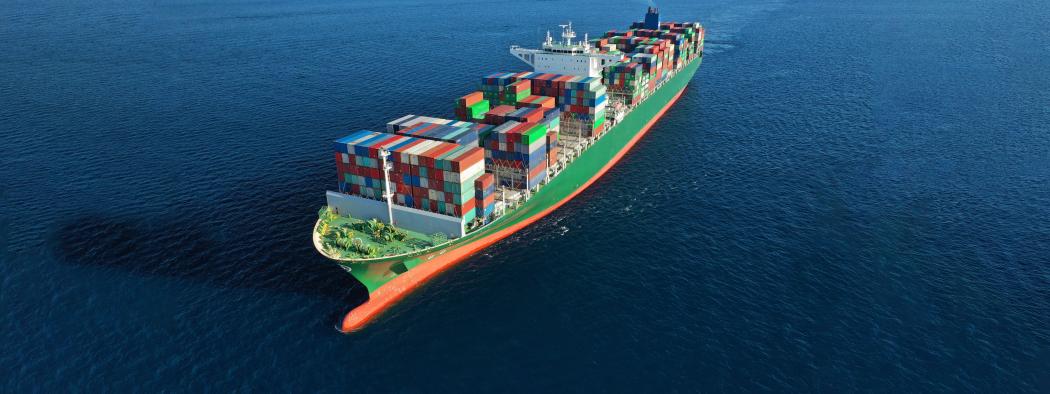
The agreement covers around 9,000 TEU of seafreight to be transported in 2025 with DHL Global Forwarding's GoGreen Plus service. In doing so, shipping lines on behalf of DHL Global Forwarding will use maritime fuels based on waste and residues, so-called Sustainable Marine Fuels (SMF).
Specific agreements for 2025
The cooperation comprises, according to the company, around 9,000 standard containers that are to be transported in 2025 with sustainable marine fuels. Through the use of these energy sources, the partners expect a reduction of
transport-related greenhouse gas emissions on a well-to-wake basis of about 4,700 tonnes of carbon dioxide equivalents. This corresponds to a reduction of around 85 percent of the emissions on the main route compared with conventional fuel. The reductions achieved are verified by the independent certification body SGS.
Technical approach and procedures
The fuels used are accounted for under the Book & Claim mechanism. This enables fossil fuels within the own network to be replaced by sustainable alternatives and the resulting environmental benefits to be
allocated to customers, even if the transports do not physically run on the alternative fuels.
"The collaboration with DHL Global Forwarding on sustainable transport solutions is an important component of our strategy to reduce emissions in our logistics processes," said Ondrej Slezacek, Global Category Manager Sea & Air Freight at Henkel. "At the same time, it can help accelerate the transition to low-emission logistics in our industry."
Experiences from the pilot project
Already in 2024, the two companies had tested the use of sustainable
marine fuels for a portion of Henkel's freight volume in a pilot project. The positive experience has now led to a clear expansion in 2025, according to the companies.
Market significance and regional emphasis
According to DHL Global Forwarding, the majority of the transported shipments originate from Europe. By increasing the use of sustainable marine fuels, the partners aim to accelerate the transition to low-emission logistics and at the same time develop the market for these energy carriers to overcome existing bottlenecks in availability.(av)