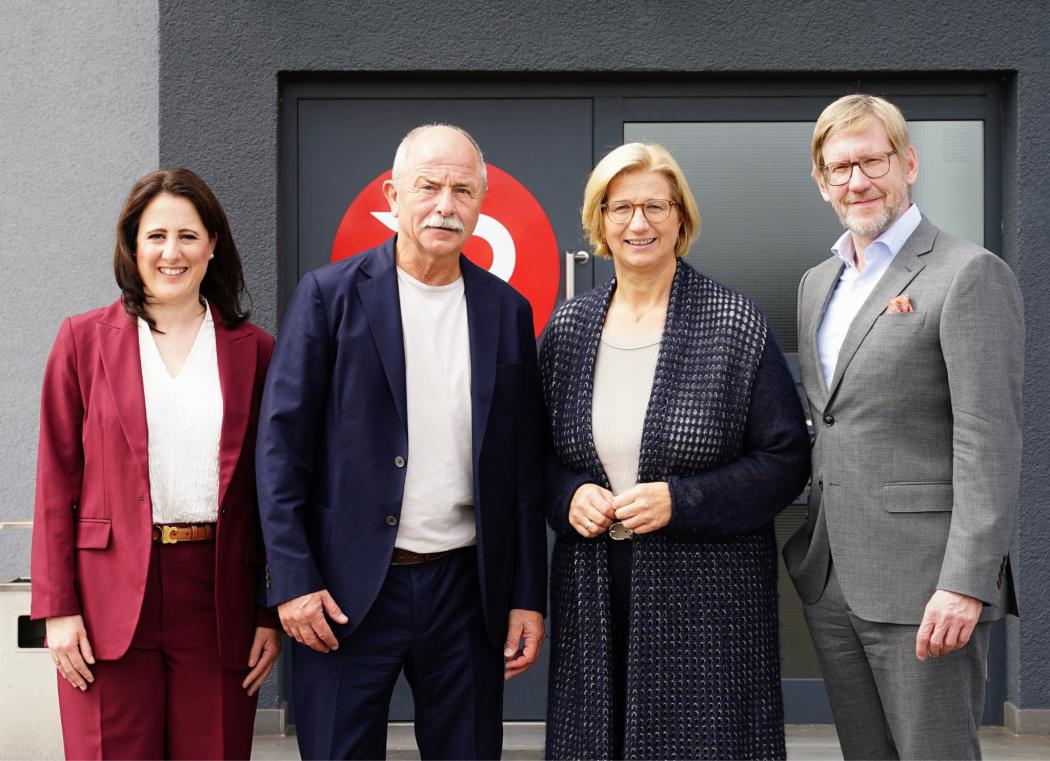
On September 13, 2025, representatives of the Federal Association for Freight Forwarding and Logistics and of the Saarland State Association of the Transport Industry met the incumbent President of the Bundesrat and Saarland's Prime Minister Anke Rehlinger in Saarlouis. The host of the discussion was Nikolaus Rein, a mid-sized contract logistics company with more than 400 employees, eleven sites, 40,000 square meters of logistics space in Saarlouis and 200 own trucks, including long trucks.
Pressures from Location Factors
According to the two associations, the industry is under pressure from deteriorating location factors. Declining turnover, decreasing investments, high electricity costs, increasing bureaucracy and uncertainties surrounding the energy transition have led to stagnation and a decline in industrial production. This development directly affects logistics.
Challenges for Freight Forwarders
The freight forwarding companies are, according to the associations, affected by lower shipment volumes, rising personnel costs, narrow profit
margins, increasing customer requirements and high costs for the transformation. The organizations stressed that climate protection goals can only be achieved within economically viable conditions. Production cuts or job losses could not be a response to climate protection.
„The freight forwarding and logistics sector is an indispensable motor of our economy – also here in Saarland. Companies like Nikolaus Rein GmbH show that medium-sized businesses are not only capable and innovative, but also take responsibility when it comes to the transformation toward greater climate neutrality. For the state government it is clear: We are pulling together with all actors to secure the competitiveness of the logistics sector here in Saarland – be it with energy prices, infrastructure, the transition to alternative propulsion, or the preservation of jobs,” says Minister-President Anke Rehlinger.
Policy Demands
The associations demand targeted subsidies for building on-site charging infrastructure for electric
vehicles, improved grid availability and a reduction of the electricity tax also for logistics companies. In addition, they advocate for a credit mechanism for renewable fuels in truck tolls and fleet-wide emission limits. They expect federal and state governments to invest public funds and special-purpose funds in future-oriented projects.
Frank Huster, Managing Director of the DSLV Federal Association for Freight Forwarding and Logistics: „Green logistics needs to be profitable. As politics sets ambitious climate targets, it must also create the conditions for their implementation in companies. To be able to invest in the transport transition, freight forwarding companies need growth impulses, tax and levy relief, a reduction of bureaucratic hurdles and capable infrastructures. Only then can German logistics companies remain internationally competitive.”
Role of Rail
A robust railway could relieve road traffic and mitigate climate impact, according to DSLV and LVS. But this requires not
only financial support, but also a reform of the organization and financing of this transport mode.
Significance of Framework Conditions
The industry representatives made it clear that for a successful transport transition, tax relief and a reduction of bureaucratic hurdles are required. Only in this way can climate targets be reconciled with economic stability and the preservation of jobs.
Background on the Associations
The Federal Association for Freight Forwarding and Logistics represents over 16 regional state associations, around 3,000 German freight forwarding and logistics companies with a total of 600,000 employees and an annual turnover of 131 billion euros (as of July 2024). The Saarland State Association of the Transport Industry represents in the state businesses of goods transport, freight forwarding, logistics, furniture removal, as well as the omnibus, taxi and rental car trades and concludes, among other things, collective agreements with the union ver.di.(av)