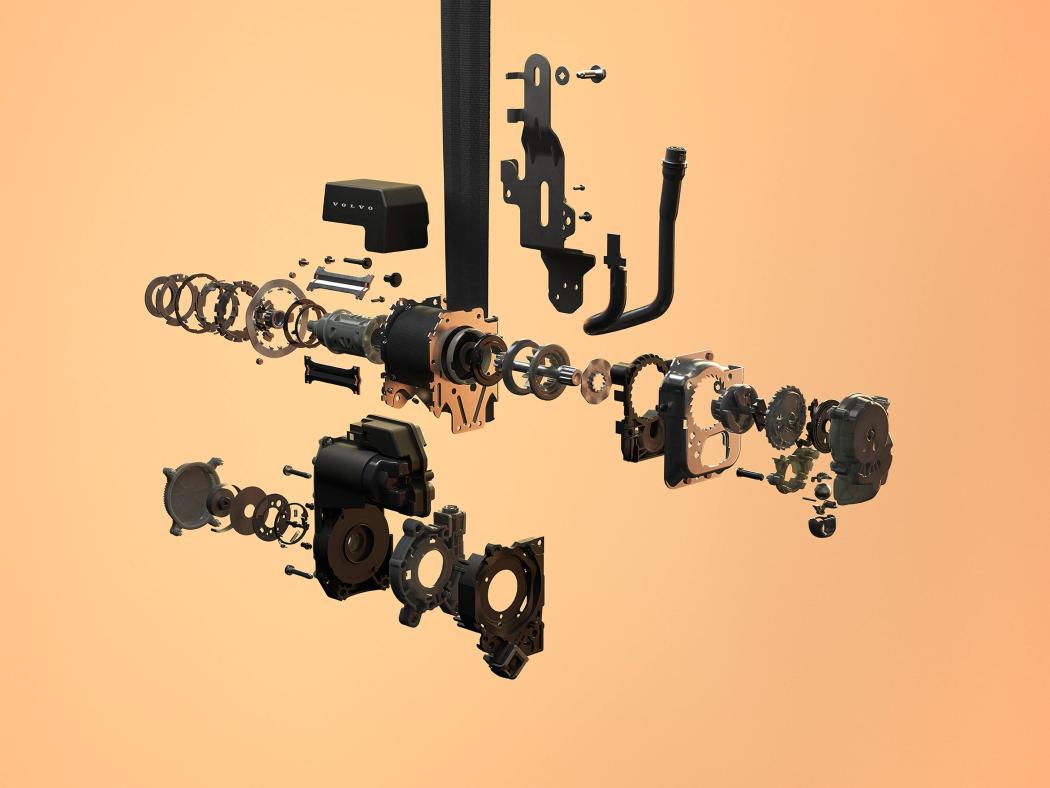
News from the inventor of the three-point seatbelt in mass production: Volvo Cars will introduce the world's first multi-adaptive seatbelt in the all-electric mid-size SUV Volvo EX60 starting from 2026.
The multi-adaptive belt uses real-time data from internal and external sensors, analyzing size, weight, body posture, and traffic situations – and adjusts the restraining force individually.
More protection through smart data usage
The system reacts to every situation in milliseconds: For larger occupants and severe accidents, it increases the belt force to prevent head injuries. For smaller individuals or lighter collisions, it
reduces the pressure to avoid rib fractures, for example. This is made possible by eleven load-limiting belt profiles – compared to three in conventional systems.
The adaptive belt communicates in real-time with sensors for the interior, vehicle surroundings, and crash behavior. The vehicle calculates the optimal belt force within a blink of an eye – tailored to the accident scenario and passenger. Additionally, over-the-air updates continuously improve system performance, making the safety level future-proof.
Volvo Safety Center: 25 years of real safety
The belt was developed and tested at the Volvo Cars
Safety Center, one of the most advanced crash laboratories in the industry. Here, engineers simulate real accident scenarios beyond legal requirements – aiming to protect real people as best as possible. Over 80,000 real accident data from five decades are included in the development.
Safety ecosystem with system advantage
The new belt is an integral part of the Volvo safety ecosystem. It works in networked operation with airbags, occupant recognition, and driver assistance systems. This combination maximizes the effectiveness of the restraint systems and minimizes secondary damage.
“The multi-adaptive seatbelt is a
turning point – and shows how we can protect real lives with real-time data,” says Åsa Haglund, Head of the Volvo Cars Safety Center, and adds:
“With this, we continue our tradition: Even the three-point belt that Volvo introduced in 1959 has saved over a million lives.”
What does this mean?
Volvo once invented the three-point belt for mass production. Since then, safety has been a top priority – and now this system has been further developed in the hope that it will save even more lives and reduce the severity of