The transport and logistics industry operates under high time and performance pressure, according to the software provider Rio. Customers would demand reliable delivery times, deadlines are tight and disruptions directly affect operations. According to the company, communication between planning and driving personnel is a particularly critical factor. In practice, however, it is often hampered by media breaks, language barriers, and lack of transparency.
Six problem areas in daily business
Rio identifies six essential challenges that shape the everyday operations of freight forwarders and shippers. These include paper-based processes, language barriers, an unclear route progression, lack of standards in communication, high coordination effort, and non-integrated systems.
Paper-based processes
delay downstream steps such as invoicing or handling, and carry the risk of information loss. Linguistic differences hinder information exchange and can affect punctuality and service quality. When real-time data on the route progression are missing, dispatchers must make decisions on an uncertain basis.
According to Rio, the multitude of informal communication channels such as telephone or messenger also makes legally compliant documentation more difficult. At the same time, the lack of complete information increases the coordination effort between drivers and dispatch. Heterogeneous system landscapes with different transport management solutions prevent end-to-end processes and reduce efficiency.
Digital solutions as a foundation
The company emphasizes that digital instruments
are required to address these difficulties. Standardized processes, automatic status messages, and interfaces to existing systems could create transparency and reduce sources of error.
“With the right tech stack for logistics and transport management, dispatchers gain time for the essential: confident handling of complex processes and customer care,“ explains Daniel Strucks, CEO of Rio. “Drivers, in turn, benefit from clear information and easy handling. Thus a problematic interface becomes a stable connection. From daily pressure, reliable routine emerges.”
Company information
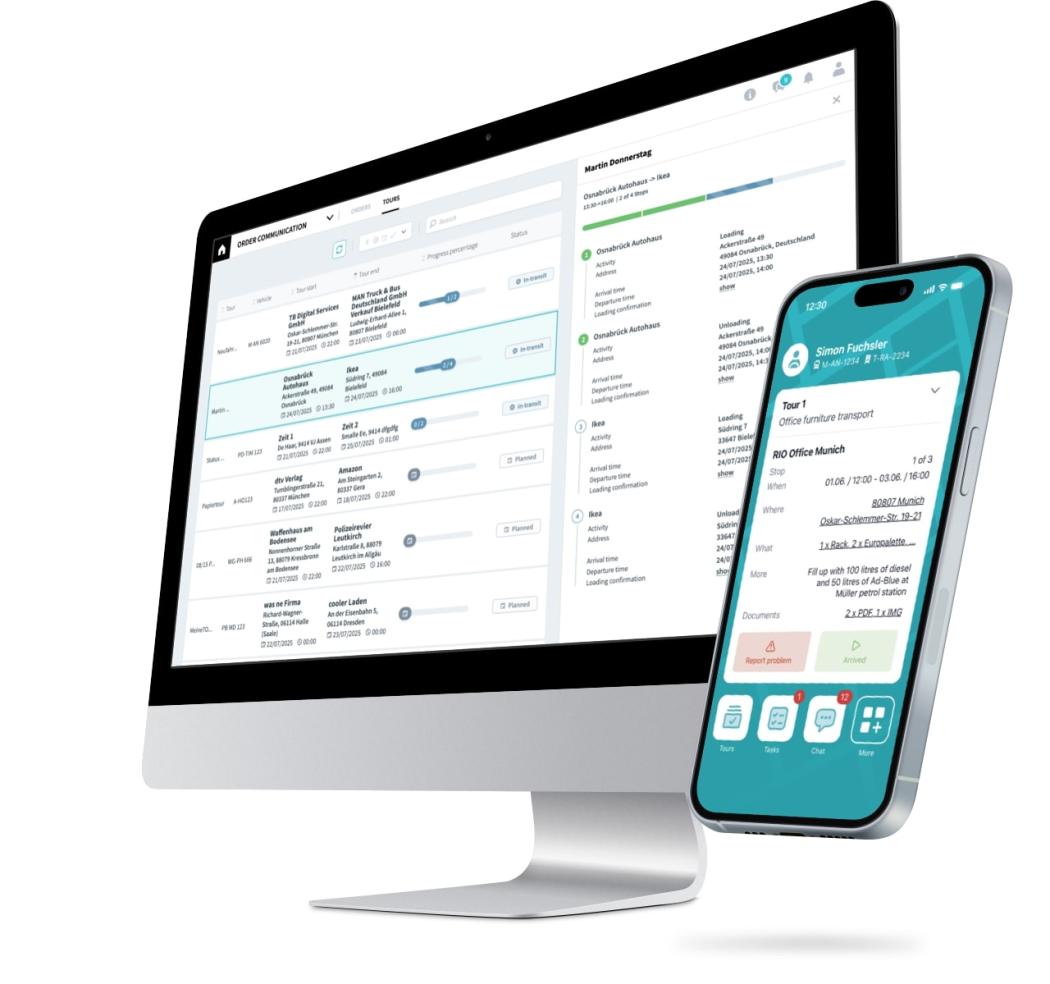
Rio is headquartered in Munich and Paderborn and develops digital applications for the orchestration and control of logistical processes. At the center is the Rio SCOP platform,
which connects transport management and ERP systems. This aims to close digital gaps between manufacturers, suppliers and transport service providers.
By early 2025, according to the company, Rio SCOP had managed more than 16 million delivery requests, 600,000 transport assignments, and 700,000 transports. In addition, the company offers solutions for fleet management, such as telematics and communication with drivers.
Currently, the systems process more than 115 million status messages per day from around 290,000 vehicles. More than 35,000 customers with a total of over 82,500 users rely on these applications, according to Rio. The company is a subsidiary of the Traton Group and employs around 130 staff.