The use of artificial intelligence (AI) in warehouse management is becoming increasingly important. Companies face growing pressure to design their warehouse processes efficiently, flexibly, and cost-effectively. The challenges range from rising customer expectations to complex supply chains and structural bottlenecks such as skilled labor shortages and outdated IT infrastructure. Against this backdrop, AI-based solutions offer a practical approach to modernizing warehouse management.
For example, the supply chain software provider Blue Yonder relies on a combination of predictive and agent-based AI to analyze, control, and continuously optimize processes in the warehouse. The Warehouse Management Solution is cloud-native, scalable, and integrates various AI-powered features that go beyond traditional warehouse management tasks. The goal is to avoid data breaches, automate decision-making processes, and coordinate operational workflows across functions.
AI agents in the warehouse process information in real time
Ein zentral element der Blue Yonder-Lösung ist der „Warehouse Ops Agent“. Dabei handelt es sich um einen digitalen KI-Agenten, der in der Lage ist, betriebliche Informationen in Echtzeit zu verarbeiten und aufzubereiten. Der Agent erstellt dynamische Tagesberichte, erkennt
operative Abweichungen und reagiert unmittelbar auf Veränderungen im Lagergeschehen. Entscheidungsprozesse, die bisher manuell oder zeitverzögert erfolgten, können damit deutlich beschleunigt werden.
The analysis of large data volumes occurs within seconds. This enables operations managers to respond more quickly to bottlenecks or disruptions and to adjust the processes. The Warehouse Ops Agent thus serves as a link between data analysis and operational implementation.
Dynamic resource allocation coordinates staff, equipment, and tasks
Darüber hinaus bietet Blue Yonder mit „Resource Orchestration“ ein Instrument zur dynamischen Ressourcenzuweisung. Mitarbeitende, Geräte und Aufgaben lassen sich damit in Echtzeit koordinieren. Die Funktion berücksichtigt dabei nicht nur Aufgabenprioritäten und Fähigkeiten des Personals, sondern auch betriebliche Engpässe, Gerätezugriffe und aktuelle Störungen. Ziel ist eine flexible, bedarfsorientierte Steuerung der verfügbaren Ressourcen. Änderungen im Betriebsablauf werden automatisiert kommuniziert, wodurch Reaktionszeiten sinken und die Produktivität steigen sollen.
In addition to real-time control, a precise forecasting model is used. The AI-supported resource planning enables reliable forecasting of personnel and equipment deployment weeks in advance, but also on short notice before the shift starts. Unlike traditional planning
methods that rely solely on historical data, Blue Yonder's forecasts also incorporate real-time information, predictive learning models, and current process trajectories. This increases planning accuracy and improves shift preparation, according to the company.
“Slotting” optimizes warehouse utilization based on order volume and picking times
Another application field for AI is slotting, i.e., strategic allocation of storage locations. With „Advanced Slotting“, Blue Yonder further develops this process from a rule-based method to a continuously optimized system. AI algorithms calculate in real time the optimal warehouse layout, based on factors such as order volume, picking times and current demand. The goal is to shorten travel times, increase fill rates and efficiently exploit warehouse capacity. At the same time, warehouse managers receive real-time information about slotting quality through AI agents and can make targeted adjustments.
Seamless integration of robotics systems into existing warehouse processes
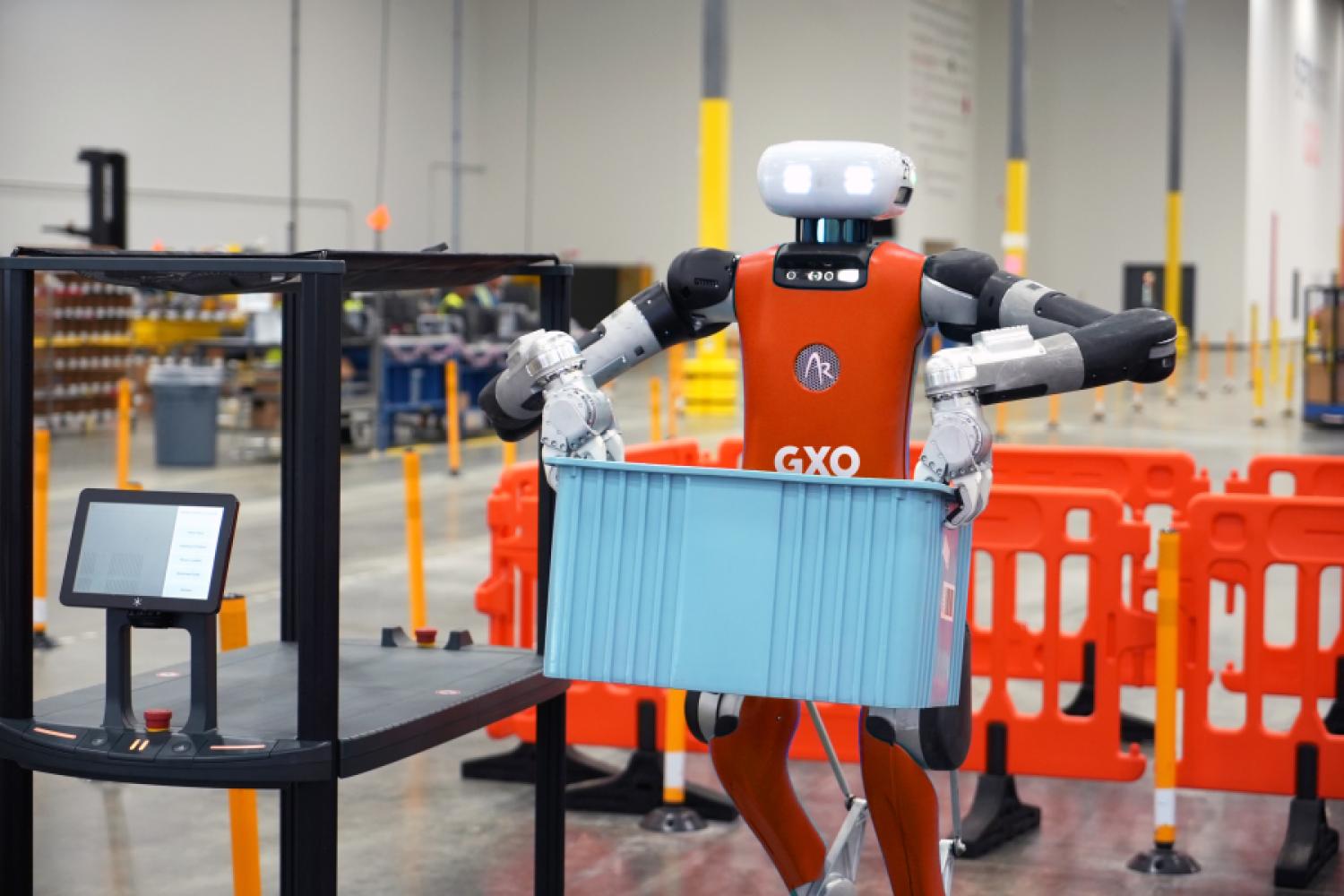
Also in the automation domain, AI plays a central role. The Blue Yonder solution enables seamless integration of robotics systems into the existing warehouse processes. Automated and manual tasks can be linked
and controlled via a common platform. Communication between the Warehouse Management System and automation occurs in real time, enabling any errors to be detected and corrected immediately. The performance of robotic systems can be captured both autonomously and in collaboration with staff. This provides a comprehensive data basis for assessing overall performance.
Finally, new AI-powered migration tools make the switch to newer warehouse management systems easier. They reduce the complexity of system integration, shorten implementation times, and enable a more efficient transition from legacy systems to the current solution. Companies benefit from greater operational flexibility and a faster return on investment.
The Blue Yonder example shows how AI will not only automate warehouse management in the future but also strategically develop it further. Through the use of cognitive technologies, processes become more transparent, decisions data-based, and resources deployed more efficiently. Warehouse managers receive a comprehensive control instrument that supports both operational execution and long-term planning. The AI-assisted warehouse management could thus significantly contribute to increasing competitiveness in an increasingly dynamic market environment. (Source: