ENO Telecom GmbH, a wholesaler of telecommunications products based in Nordhorn, has optimized its outbound logistics processes. The background: with the steady expansion of the range—from smartphones and tablets to large-volume electronics such as televisions, sound systems and household appliances—the demands on handling heavy packages also increased. Especially during peak times in the late afternoon, when the bundled customer orders of the day are processed, the physical strain on the staff was enormous.
30 Kilograms by hand and at a high cadence
So far, packages weighing up to 30 kilograms had to be lifted by hand many times – often under time pressure and at a high cadence.
Rainer Büter, authorized signatory at ENO, describes the situation clearly: “Individual cartons weighing 30 kilograms can perhaps be carried a few times, but not hundreds of times.”
These working conditions led not only to increased physical
strain but also to declining motivation within the team. The outbound goods area was increasingly regarded as an unattractive workplace within the company.
Exoskeletons were too inflexible for daily operation
To find a sustainable solution, ENO tested various ergonomic support systems, including exoskeletons. These proved to be too inflexible in daily operation – they had to be worn permanently and offered support only for particularly heavy or unwieldy packages.
Therefore the company decided on a different approach and brought in external expertise: Together with the planning office Logistik Conzept Klette, they sought an individualized solution that can be flexibly integrated into the existing work process and provides tangible relief for the staff.
Vacuum hose lifter with rail system was the solution
ENO found a partner in Timmer GmbH, a manufacturer of vacuum lifting technology from the nearby Neuenkirchen. After on-site tests, the choice fell
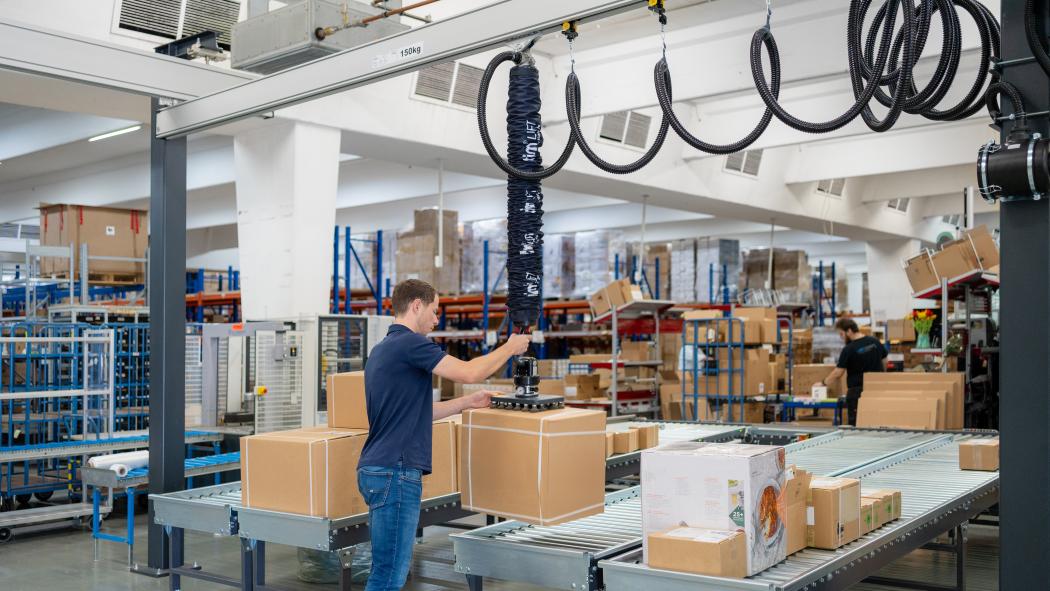
on the model “quickLIFT,” a vacuum hose lifter with a rail system measuring five by seven meters.
The decision was based on several factors: the new hose lifter is easy to operate, flexibly usable and enables safe and efficient handling of loads of varying weights. After a brief briefing, the staff could use the system directly in practice.
The “quickLIFT” was seamlessly integrated into the existing conveying technology at the outbound area. Installation took only a few days. According to Tim Kaldeweide, a sales technician at Timmer, the installation went smoothly. Also smaller on-site adjustments were promptly implemented.
The operation of the system is intuitive, which further increased acceptance among the staff. Since then, the hose lifter has been used hundreds of times daily – whenever packages weigh more than ten kilograms or are bulky. Lighter shipments are still handled manually by the staff.
Outbound shipping is once again an attractive workplace
The transition apparently already showed measurable successes: Outbound shipping is now considered an attractive workplace again. Initial internal evaluations at ENO also show a reduction in sickness-related absences. A detailed amortization calculation is still pending, but the benefits for the company are evident.
“The lifting technology prevents fatigue, reduces sick leave and strengthens our position as an attractive employer,” concludes Rainer Büter.
Also on the Timmer side, the project is seen as a successful example of how ergonomic lifting technology can specifically contribute to improving working conditions. Tim Kaldeweide emphasizes the importance of close collaboration with the customer as well as with external planners:
“If a solution is planned individually together with the customer, acceptance is high from the start and the benefit is immediately tangible.”
The regional proximity between ENO and Timmer additionally contributed to