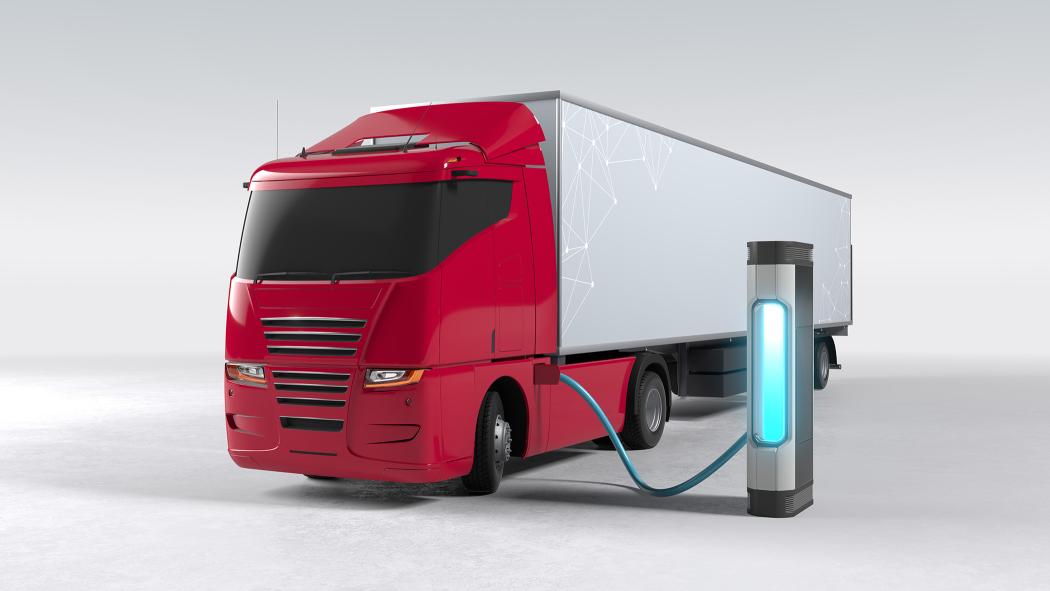
On Vector's campus in Stuttgart, in mid-September as part of a roadshow for the Banula research project, a publicly accessible charging session for an electric truck was demonstrated. The aim of the event was to show how non-discriminatory charging of heavy commercial vehicles can be implemented in the pass-through model.
Functioning of the pass-through model
The idea of the Banula project: separate electricity procurement from charging infrastructure operation. Operators provide charging points for a fee, while users can use their own electricity
tariff at each charging point. The energy-market settlement is carried out via a virtual balancing area, according to the announcement, which allows electricity quantities to be unambiguously allocated and transparently billed. A central roaming platform or duplicate interfaces are not required.
Technical implementation at the Vector campus
For the practical test, Vector's charging and load management system vCharM was used. It enables dynamic, grid-friendly charging. In conjunction with an external billing system, it creates a template for companies that want to use
their charging infrastructure in a versatile way. This includes the integration of photovoltaic power from their own depots, public charging of third-party trucks, or the use of private electricity contracts by employees for service vehicles.
Banula project and government funding
The Banula research project, titled "Creating barrier-free and user-friendly charging options," is coordinated by the Fraunhofer Institute for Industrial Engineering and Organization. It aims to make non-discriminatory charging infrastructure nationwide accessible.
The state of Baden-Württemberg supports the development of a public charging
network for electric trucks in the regional road network. Requirements include a high share of photovoltaic power and billing models that enable fair use.
Consortium and participants
The Banula consortium includes TransnetBW, SmartLab, OLI Systems, the Schwarz Group, the University of Stuttgart, the law firm bbh, and the energy provider badenova. Vector is involved as an associated member. The successful implementation at Vector shows how the evaluation criteria of the new funding guideline Base BW can already be technically fulfilled today. (av)