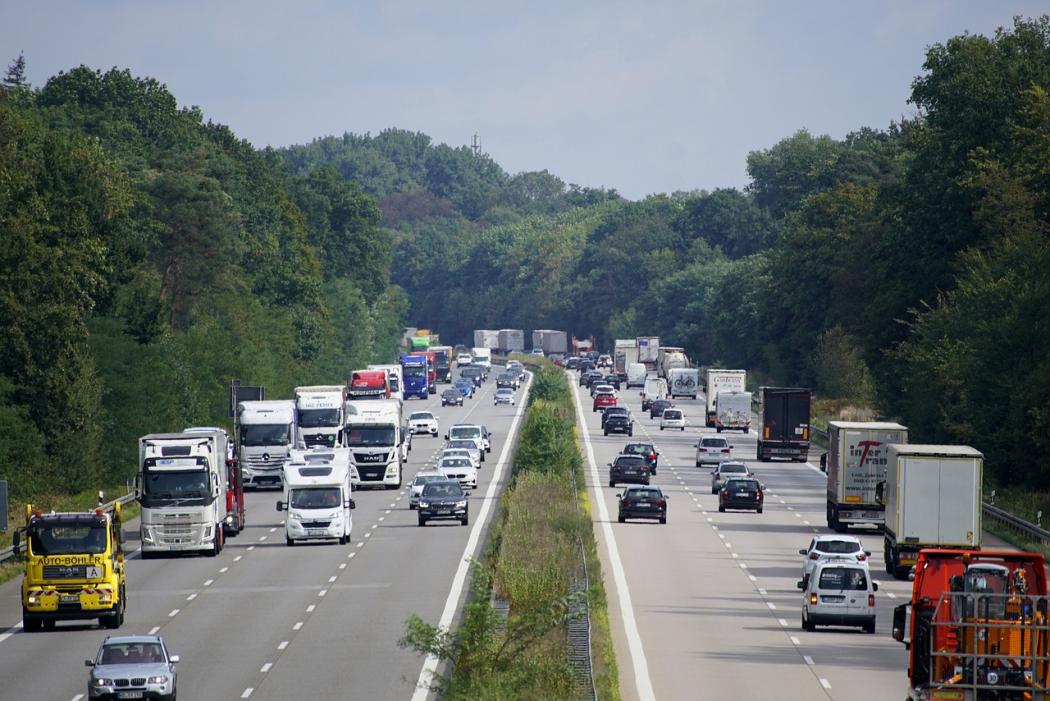
100 days after the start of the federal government under Chancellor Friedrich Merz, the Federal Association for Logistics & Transport (BLV-pro) issued a clear warning. Insolvencies in road freight transport would increase noticeably. The association, which since 2020 had initially acted as an initiative and since 2021 as a registered association for small and medium-sized transport companies as well as their drivers, sees Germany's supply security at risk.
Results of a survey
In the past week, BLV-pro conducted a survey among entrepreneurs and drivers. The aim was to gauge the mood in the industry and the assessment of the first 100 days of the government. The feedback painted a clear picture: wage dumping, lack of controls in cabotage traffic and increasing bureaucracy burden the businesses. At the same time, drivers complain about a lack of appreciation, rising costs for sanitary facilities and a continuing insufficient expansion of
truck parking spaces.
„The working conditions for drivers are deteriorating apace – high costs for dirty sanitary facilities, lack of hygiene, lack of appreciation and lack of parking spaces are only some of the challenges. But the reason that many drivers leave logistics as well,“ said Mirko Reichelt, a driver and representative in the association.
Burden on companies
Also at the company level, the association sees acute risks. The secretary, Bärbel Karnik, reported an almost daily number of business closures and insolvencies of small and medium-sized forwarding companies. The central causes she cited were diesel prices, CO2 charges and the recent toll increases. These factors press not only weaker firms but also burden the companies that have so far managed to hold on.
„The death of Germany's road freight transport must be stopped,“ Karnik said.
Endangered competitiveness
BLV-pro chairman Konstantin Popov drew attention to structural market shifts.
In his assessment, the combination of large Eastern European fleets, nontransparent subcontractor chains, and the lack of enforcement of existing rules leads to a creeping displacement of German providers.
„Our industry is a pillar of supply security in Germany – and this pillar is wobbling,“ Popov said.
Policy recipients
According to the association, it forwarded its statement to central decision makers in the federal government. In addition to Chancellor Friedrich Merz, the letters were sent to Transport Minister Patrick Schnieder, Labor Minister Bärbel Bas and Finance Minister Lars Klingbeil. This was intended to underline that it is an industry-wide challenge affecting several ministries.
Twelve-month action plan
To stabilize the situation in the short term, the association calls for an implementation roadmap for the coming twelve months. This initially provides for a draft law on transparency obligations and contracting party liability. In parallel, the Federal Office for Logistics
and Mobility should be strengthened in personnel to start a pilot project for digital cabotage controls in three federal states. Further steps concern the technical preparation of a requirement for digital freight documents such as eCMR and eFTI, whose interfaces should be tested. After a year, first results should also be published in a monitoring report. In addition, the association demands the release of toll data to better sanction violations.
Industry assessment
With its statement, the BLV-pro makes clear that it is not only about individual cost factors, but about the long-term competitiveness of Germany's road freight transport. The association warns of a permanent structural change that could threaten both jobs and supply security alike. For forwarding and logistics companies in Germany, it is therefore clear: the political setting in the coming months will be decisive as to whether medium-sized enterprises can compete or continue to lose