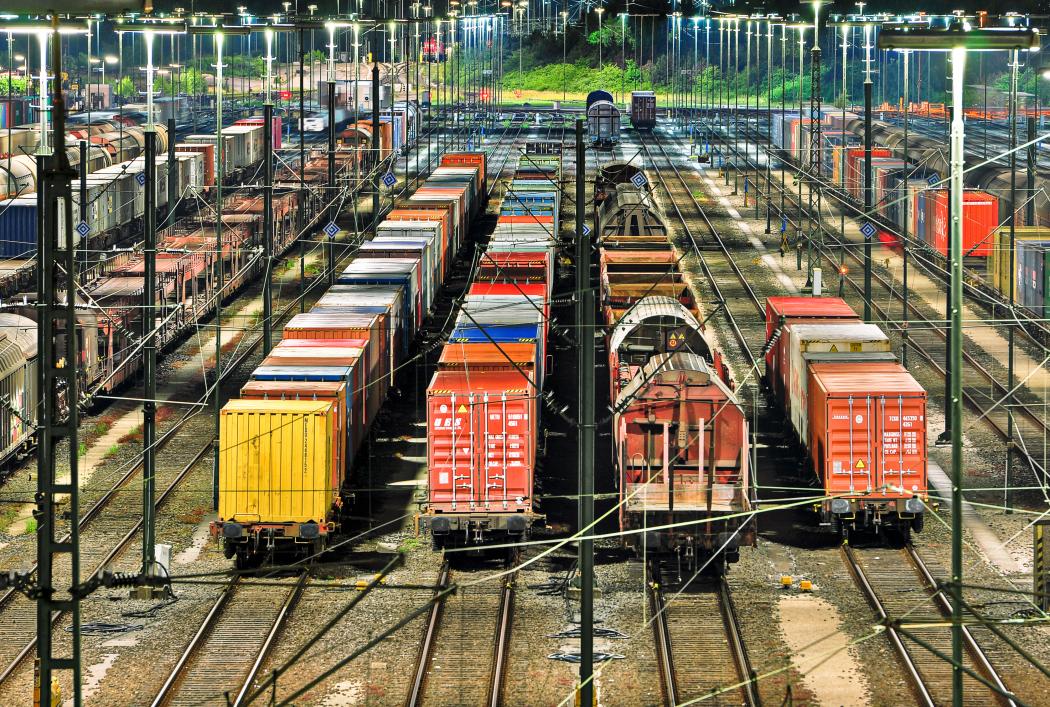
The Association of German Transport Companies (VDV) sees both positives and negatives in the federal government's draft budget for 2026. In particular, the planned reduction in track price subsidies for rail freight transport from 275 to 265 million euros is, from the industry's perspective, a painful cut. According to VDV calculations, the annual requirement is at least 350 million euros.
Additional funds for infrastructure
Conversely, the industry association positively assesses the additional funds for rail infrastructure and the continuation of e-bus funding. However, with regard to funds for the modernization of public transport infrastructure, there is a need for improvement from the VDV's perspective.
"The already insufficient track price subsidy for rail freight transport
is now set to be further reduced – this is a wrong signal at a time when we need more climate-friendly freight transport by rail, not less," said VDV President Ingo Wortmann. "Track prices have been heavily burdening freight railways for years. Even today, the subsidy is not enough to create fair competitive conditions with trucks."
Therefore, the VDV calls for a correction of the planned cuts through the parliamentary process and a significant increase in track price subsidies for rail freight transport in the federal budget. Especially since these funds for long-distance rail passenger transport are to be significantly increased from 105 million euros to 200 million euros according to the current draft
budget for the 2026 fiscal year.
"The federal government has apparently recognized the economic challenges faced by railway companies due to rising track prices. The funds for promoting track prices in long-distance rail passenger transport are to be almost doubled, which is good and right. However, simultaneously reducing the subsidy for rail freight transport is not comprehensible. Rail transport should be viewed as a comprehensive system. Therefore, more funding on one side should not lead to less funding on the other," said Wortmann.
As an industry association for public mobility and rail transport in Germany, the VDV also looks at other positions important for the industry in the federal government's draft budget. In addition
to the higher track price subsidy for long-distance rail passenger transport, the association sees further positive developments in various budget titles.
Construction cost grants positive
It is positive that investments through direct construction cost grants are expected to increase significantly in 2026. The VDV also regards the increase in funds for investments in rail infrastructure for small and medium measures to relieve the rail network as positive.
More funds for alternative drives
The VDV has been demanding these additional funds for a long time. The slight increase in funding for alternative drives in rail transport is also welcomed from the VDV's point of view, as well as the continuation of funding for buses with