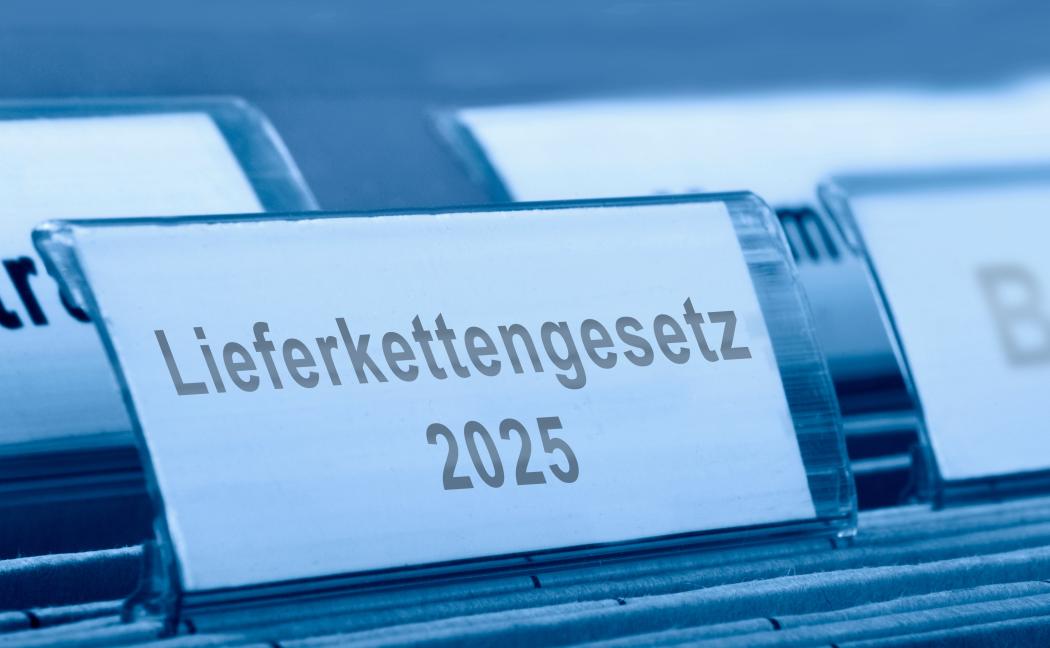
The German supply chain due diligence law doesn't actually apply directly to SMEs, as it only applies to companies with at least 1,000 employees. A survey conducted by the IHK-Region Stuttgart among member companies on supply chain regulation now comes to a different conclusion: It sees SMEs burdened more than expected, according to a press release from IHK dated September 19. The requirements extend through all value chains, the implementation costs a lot of resources, and especially business relationships in so-called high-risk countries come under strain, it says there.
The high bureaucratic costs as well as rising liability and reputational risks, in the view of the study authors, overwhelm many small and medium-sized enterprises in dealing with suppliers from high-risk regions – such as all countries of the Global South, Vietnam, India or Bangladesh. According to the survey, about a third of the affected SMEs have already terminated business relationships entirely or partially, others plan
to withdraw.
“That is exactly the opposite of what we want,” says IHK President Claus Paal. “This threatens the political goal of a diversified supply chain from succeeding – and the dependence of SMEs on a few countries grows.”
SMEs Affected as Well
According to the press release, around 480 member companies of the IHK Region Stuttgart participated in the survey in August 2025. The survey not only looks at the German Supply Chain Due Diligence Act that was started two and a half years ago, but is also intended to accompany the ongoing reform debate on the EU's Corporate Sustainability Due Diligence Directive (CSDDD). Accordingly, two out of five small or medium-sized enterprises report being indirectly bound by compliance with certain information and due diligence obligations through their supply relationships because of the German law. With the planned reform at EU level, even more small and medium-sized enterprises are expected to be affected.
“The
Supply Chain Due Diligence Act burdens especially the indirectly affected smaller and medium-sized enterprises with bureaucracy, costs and liability risks. This weakens their competitiveness,” says Claus Paal. “Therefore we need a real structural reform: clear, EU-wide uniform rules, tangible relief for small and medium-sized enterprises and no civil liability. Only in this way will supply chains remain sustainable, without overburdening SMEs.”
Clear Differences in Implementation
According to the study, around three quarters (74 percent) of the affected companies have at least partially implemented or plan to implement measures under the Supply Chain Due Diligence Act. However, the differences are striking: while two-thirds of directly obliged companies are already largely compliant, more than a third (34 percent) of the indirectly affected have not yet started.
Nearly all of the companies surveyed in the IHK surveys complain about high administrative burden (95 percent) and rising costs (88 percent). Added are problems with data collection, extra work with
international suppliers, as well as legal uncertainties and competitive disadvantages. Especially indirectly affected firms suffer from liability risks and declining competitiveness. Only three percent see no risks.
Support for Planned Omnibus Reform
Following massive criticism from business and politics – especially because of the high bureaucracy costs and burdens for small and medium-sized enterprises – the European Commission proposed an “Omnibus Reform” in early 2024. It should slim down, simplify, and make the CSDDD more practical. The survey results show: the planned reform is met with broad approval among companies. Especially small and medium-sized enterprises demand tangible relief – not through longer deadlines or milder sanctions, but through clear structural reforms. Expected are streamlined information obligations, a focus of the due diligence obligations on direct suppliers, and the abandonment of an EU-wide civil liability regime. Equally important to the survey participants is strict EU harmonization so that the same, understandable rules apply to all companies.