During the 6th National Cycle Logistics Conference at Eurobike in Frankfurt, the industry took a cautiously optimistic view of the future, pointing to the great potential of this mode of transport for increased climate protection as well as improved traffic safety. As the new term "Commercial Cargo Bikes" was introduced for heavy cargo bikes to sharpen their profile, association representatives emphasized that the bikes could be an important addition to trucks and vans in urban logistics.
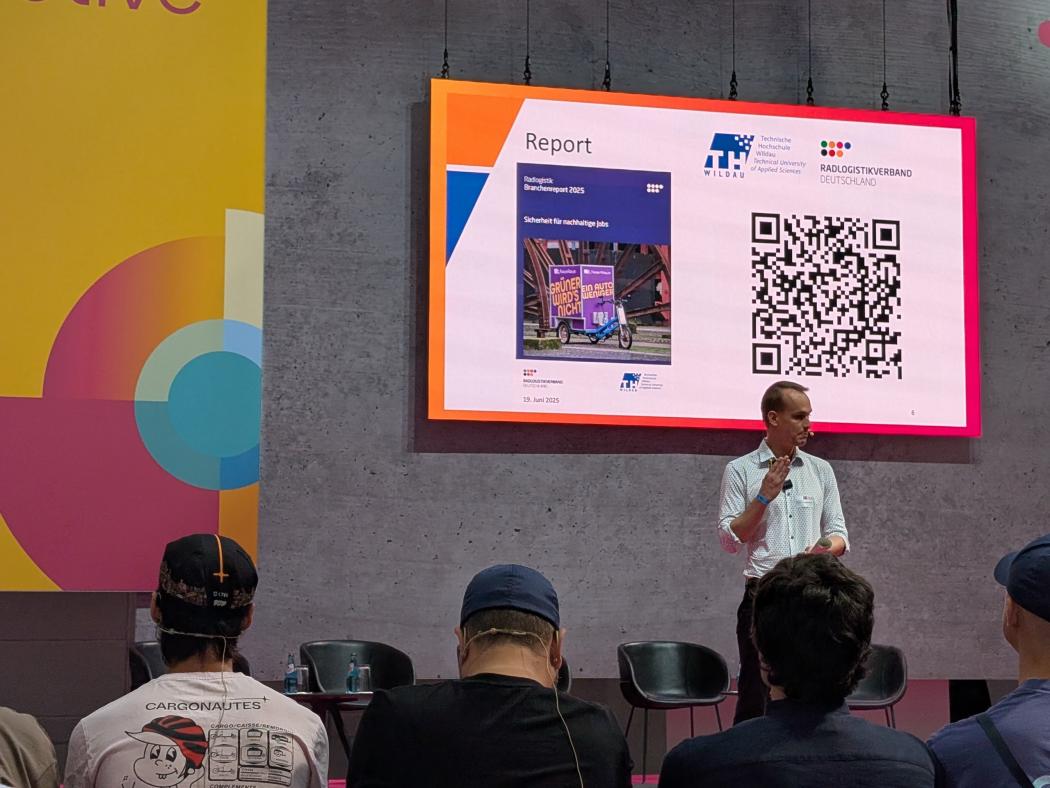
With a solid growth of 4 percent, the mood is somewhat less positive than last year, but that is still solid growth, and an 11 percent annual growth is expected in the future, sketched Tom Assmann, the first chairman of the Cycle Logistics Federation Germany (RLVD). He regards the "Commercial Cargo Bikes" as "safe and sustainable", a safe and environmentally friendly solution. It needs to be made clear to policymakers that investing in cycle logistics is also an investment in traffic safety and climate protection. From the industry's side, he considers significantly more activities towards politics and municipalities necessary to better highlight the advantages. Assmann once again calls for a prioritization of environmentally friendly
solutions in public tenders.
EPAC Regulation: Retain for Commercial Cargo Bikes
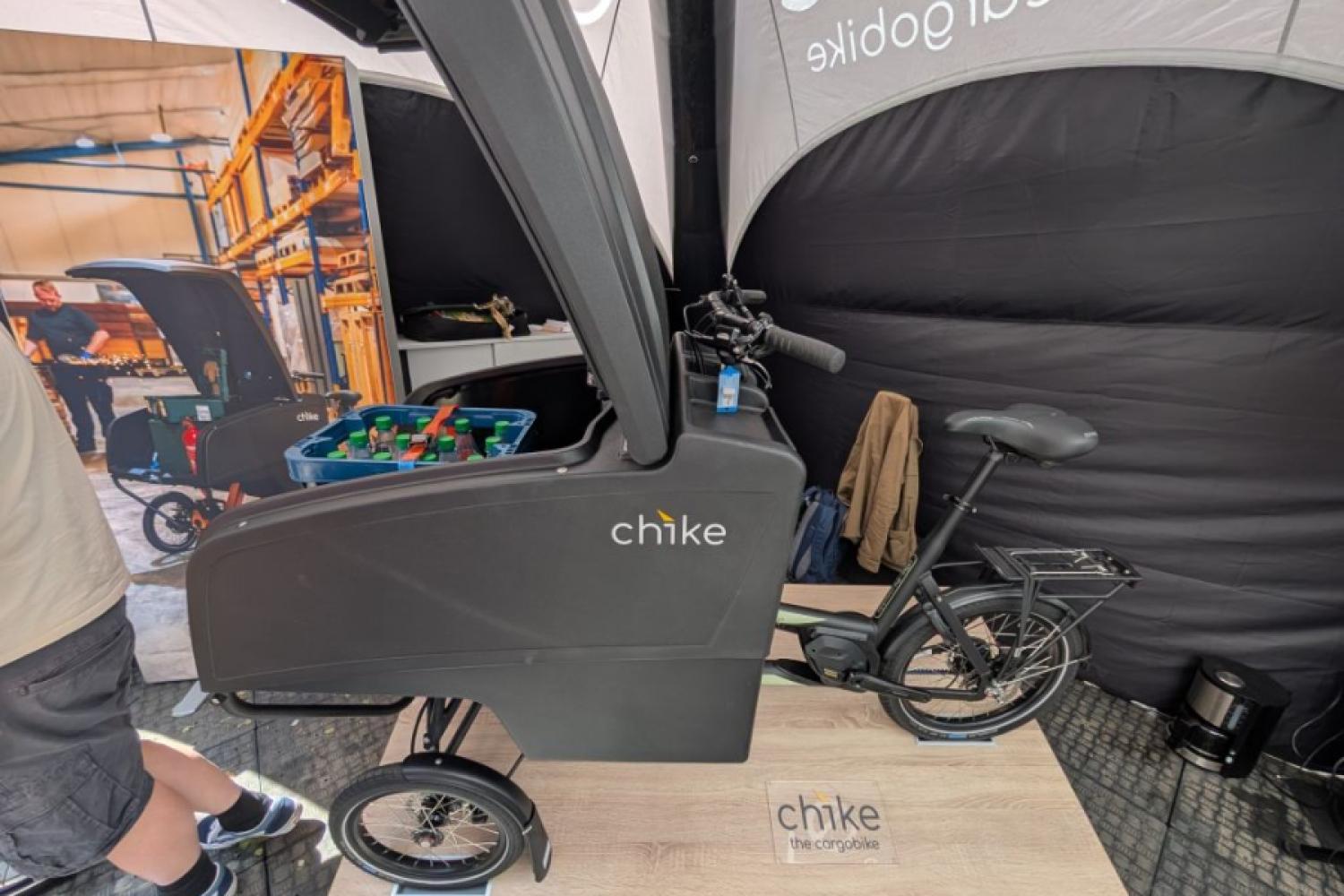
In addition, the conference debated the possible regulation of "Commercial Cargo Bikes" and the power limitation proposed by the Bicycle Industry Association. The RLVD strictly opposes this and advocates for maintaining the existing EPAC regulation (Pedelecs) because the currently possible 250 watts continuous and 750 watts peak power at a completely adequate 25 km/h top speed are simply necessary, especially with heavy loads and on ramps or inclines with the sometimes up to 500-kilogram heavy cargo bikes. A rigid uniform regulation for privately and commercially used cargo bikes is not sensible, according to the association, and would make the already difficult business model of cycle logistics almost impossible. Peak performance is not a risk but a guarantee for control, according to a position paper of the association.
Speed 25 completely adequate
There is already a European standard series with EN17860, which has proven itself and reflects the diversity of technical requirements. This should not be tampered with and should be taken seriously, appeals the RLVD. It is outlined there, for example, that commercial cargo bikes over 300 kilograms total
weight should be built, tested, and used safely, including specifications for braking deceleration, structural strength, and starting behavior. The RLVD showed openness to further developing the regulation. The speed limit remains useful in any case, also to distinguish the category from the light electric vehicles of the L-class. Representatives of the CEP industry also advocated in the debate for maintaining the regulations, as these offered many possibilities and a strict limitation could stifle the current business model of cargo bike logistics.
Not only environmentally friendly, but efficient and fast
Commercial cargo bikes are not only environmentally friendly but often also the most efficient and fastest solution in an urban context, as the example of the city of Brussels shows. Here, in a comprehensive study, the cargo bike fleet of the cycle logistician Urbike, which operates with single-track long-john bikes and trailers, was equipped with telematics and the data collected to compare it with the performance and cost balance of transporters. Overall, delivery time was reduced by 51 percent, costs were significantly lower at 2,050 euros for bike versus 9,170 euros for van, and emissions were even 98 percent lower. Often,
cargo bikes are simply the best logistical solution with the highest "operational efficiency," emphasized Margot Vandorpe of Urbike and Jakub Kopinski from the manufacturer Larry vs Harry.
Evidence meets reality - and rigid structures
Despite this scientifically recorded evidence for the first time, the transition is also progressing slowly in a city like Brussels: only three percent of shipments are transported by Commercial Cargo Bike, a remarkable increase nonetheless. This is also due to the targeted planning presented by the Belgian Cycle Logistics Federation. Various elements are needed for successful scaling of cycle logistics, summarized those responsible: Suitable bike infrastructure, dedicated mobility plans in the municipalities, professionalization of the job, but also economic incentives for the initial start-up. Moreover, besides pure transport logistics, there is also great potential for the use of cargo bikes in various trades in the service logistics sector and in craftsmanship.
Finally, how a municipality can support cycle logistics was also presented by Paul Roudaut and Martin Salles, the French cycle logistics cooperative Cargonautes. In the city of Paris, which is strongly focused on the mobility transition, there are now extremely friendly structures that facilitate and