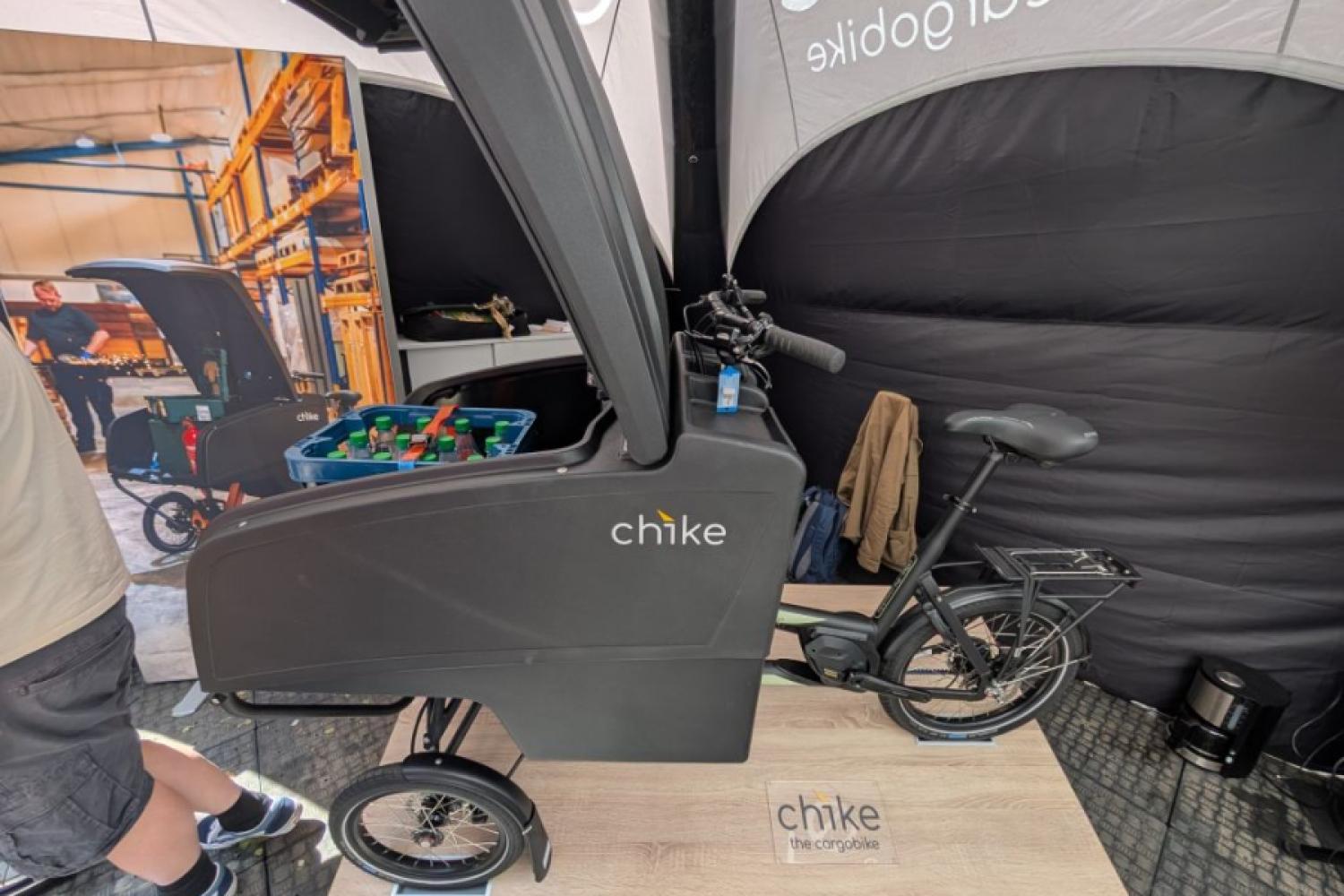
Leading European manufacturers, logistics companies, operators, suppliers and industry associations have jointly published the Cycle Logistics Declaration (CLD) – a Europe-wide statement to secure the legal and technical framework for Commercial Cargo Bikes. Already more than 50 organizations from over ten countries have signed the declaration. The list of signatories will be continuously updated and reflects the broad support of the entire Cycle-Logistics sector – from vehicle manufacturers to component suppliers to logistics operators and technology companies. To justify why the CLD is now necessary, the responsible parties point to the growing challenges for European cities, such as traffic congestion, emissions, space conflicts in public
space.
Commercial cargo bikes have developed in recent years into one of the most effective and immediately deployable solutions. They offer: 3–6 times better payload-to-tare weight ratio, up to 60% higher efficiency in urban last-mile delivery, up to eight times lower emissions than internal combustion delivery vehicles with smaller footprint and less noise. Moreover, the lightweight vehicles increase safety and free up street space.
The core demands of the Cycle Logistics Declaration:
- Maintain EPAC status for carrier cycles and heavy cargo cycles. The existing legal frameworks under EU Regulation 168/2013 – in particular up to 250 W continuous power and assistance up to 25 km/h
- – have proven effective and enable a consistent and practical deployment across Europe.
- Strengthening harmonised European safety standards. The CLD emphasises the importance of the existing EN 15194 as well as the in-development EN 17860 series, which define clear, measurable and testable requirements for professional carrier cycles – including structure, load capacity, brakes and electrical systems.
- Opposition to technical blanket restrictions without safety benefits. The signatories explicitly oppose regulatory proposals that would restrict the practicality of the vehicles, including: • assist ratio limits that impair safe starting under load • peak-power limits that can lead to instability on inclines or when heavily loaded • rigid
- weight limits (e.g., 250 kg/300 kg) that drastically reduce payload and efficiency • a re-classification into the L-category that would increase costs, stifle innovation and hinder market rollout.
The CLD finds that these measures do not provide any additional safety benefit, since safety is already ensured by the harmonised EN standards. In addition, they point to broad European support, for example from manufacturers of carrier cycles and heavy cargo cycles, from component and technology providers, from fleet operators and logistics companies, but also from consulting and development service providers as well as associations and institutions. Moreover, the responsible parties note that signing online remains possible.