The Kempten-based logistics company Dachser has launched a pilot project in Munich's city center with the opening of the new XXL bicycle logistics hub, delivering food cooled by cargo bikes and special transport containers. The pilot aims to provide insights into how emissions-free city center delivery with Frigofracht can be efficient and economical. The two-month pilot project is being implemented by Dachser Food Logistics Munich, based in Neufahrn. Together with its partner B4B Logistics and the companies DENSO with their brand GreenZen Solutions and MBM, it has been testing two technologies in downtown Munich since the end of June to deliver cooled shipments flexibly, quietly, and emissions-free by cargo bike.
Nearly 200 orders have already been executed, with 20 kilometers per tour being easily achievable, and further optimizations in operation are already underway, as reported on site by Stefan Behrendt, Managing Director Food Logistics at Dachser. For the start, economic viability is not the primary focus, but rather feasibility, he emphasized. The impetus comes both from customers who desire emissions-free delivery solutions and from the EU's climate protection regulations in general. Munich's Mayor Dieter Reiter welcomed the initiative as a potential traffic relief and sees a plausible application, particularly in the food sector, such as with butchers. He assured that he would also advocate for this with the guilds
and associations, emphasized the SPD politician.
Sophisticated construction technology with active and passive cooling
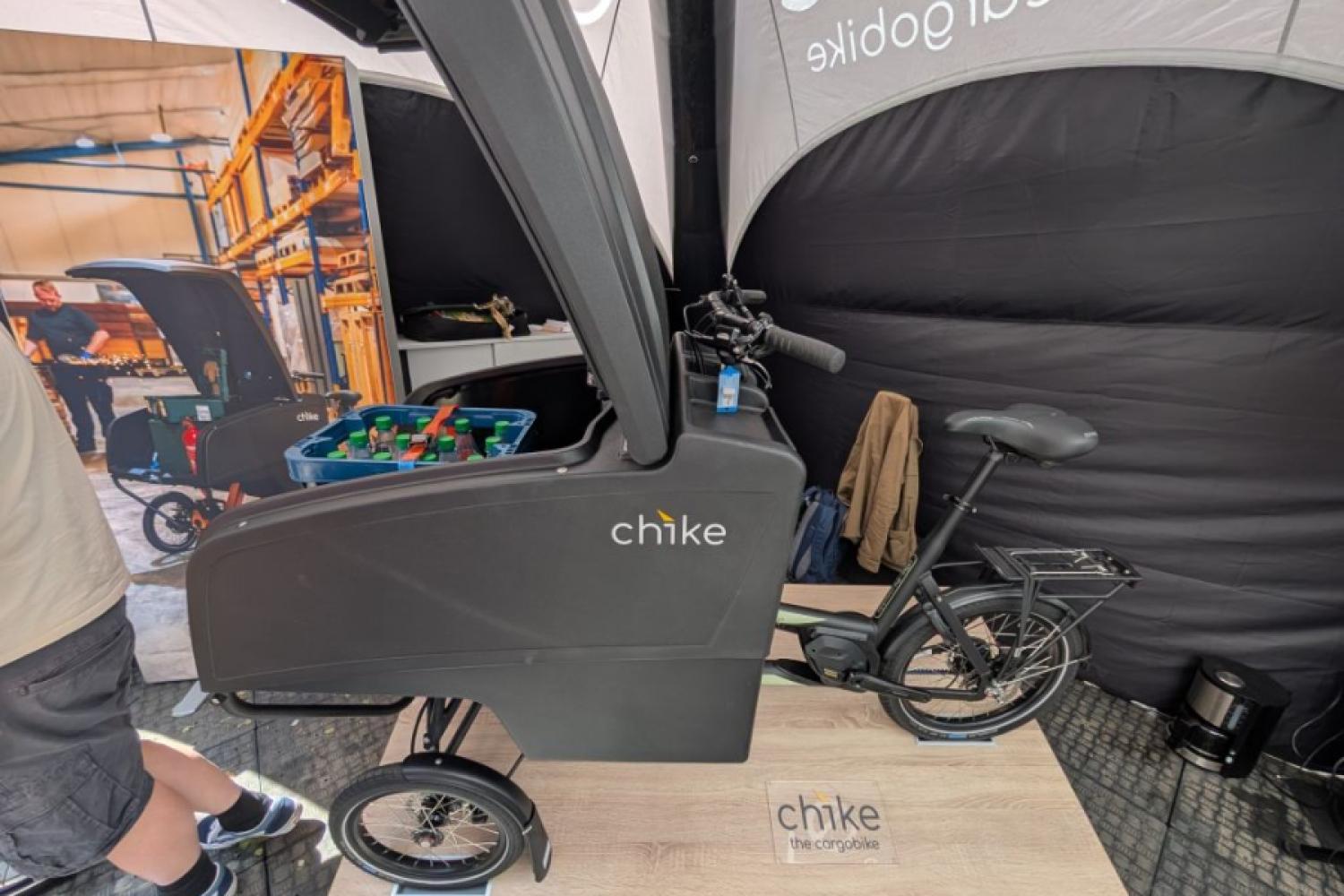
A cargo bike with an insulated container accessible from the side and rear (0.8-1.4 m³) and a battery-powered cooling unit from GreenZen Solutions with a payload of 190 kilograms is used. This active cooling solution is equipped with sensors and a connectivity module for reliable city center delivery, enabling a controlled closed cold chain with real-time data. The model distributed under the rental concept, called the Last Mile Climate Control Cube (LMCC, currently 2-7°, soon 2-25°), features a replaceable battery for multiple cycles. Additionally, a trailer with an MBM structure is utilized, which has passive cooling using cold packs and fans. This trailer can hold an entire Europallet with a total weight of up to 400 kilograms, expanding the range to bundled refrigerated freight or general cargo.
From the hub to the shop
For inner-city delivery by cargo bike, shipments are first transported from the branch in Neufahrn to the new bicycle logistics hub at the Paketposthalle on Wilhelm-Hale-Straße. These include a variety of foods such as dairy, meat, and sausage products. At the bicycle logistics hub, a large refrigerated container is available for interim storage of the shipments. Depending on the planned tour, the goods are loaded onto the cargo bike and trailer to
be delivered to one or multiple recipients. Deliveries are made to hotels, bars, restaurants, kiosks, supermarkets, and fine food shops. Two tours per day are planned during the pilot project. Maintaining the cold chain throughout the entire transport process is crucial for the high quality and safety standards in food logistics, which is monitored via sensors.
Experience with emissions-free city logistics
The company boasts extensive experience in emissions-free city center delivery. Under the "DACHSER Emission-free Delivery" label, the concept is now implemented in 19 major European cities, with six more to follow by the end of 2025. Depending on local conditions, e-trucks, e-vans, and cargo bikes are used. For the concept and pilot implementation in Stuttgart, the company received the German Federal Ministry for the Environment's and the Federal Environment Agency's Sustainable Urban Logistics award in 2018. In Munich, the Kempten company defined a delivery zone in 2022 where non-cooled general cargo shipments are delivered exclusively with e-trucks and cargo bikes. Here, the logistics company cooperates with its partner B4B Logistics, which is also on board for the new pilot project for emissions-free delivery of refrigerated goods, particularly food, in Munich's city center.
With suppliers and tech companies DENSO and MBM, they have also found technology partners for the ambitious project. The pilot is also supported by Munich's municipal
mobility department with the new bicycle logistics hub at the old Paketposthalle, providing an ideal starting point for inner-city delivery.
"Currently, there are hardly any technical solutions in the cooling sector for cargo bikes that are tested in everyday logistics and meet qualitative and economic requirements," explains Wolfram Kölzow, Operations Manager at Dachser Logistics Center Munich Food Logistics in Neufahrn.
Accordingly, the company intends to generate insights into what a reliable setup looks like in the coming weeks. The bicycle logistics hub is an important component, Kölzow continues.
"Cargo bikes can be a very useful addition to urban delivery traffic. They are flexible to use, quiet, and emissions-free, making a significant contribution to sustainable urban delivery," says Stefan Behrendt, Managing Director Food Logistics at Dachser.
He sees great potential in last-mile temperature-controlled deliveries, although their use is still subject to certain conditions: short distances, high delivery density, and suitable infrastructure such as micro depots, Behrendt primarily mentions. The experiences from the pilot project are hoped to be transferred to the European Food Logistics network in the future. For ten years, the company has been using emissions-free delivery vehicles. The fleet of vehicles with alternative drives is continuously being expanded in both local and long-distance areas. More than 130 zero-emission vehicles are now in operation across Europe for the logistics