DHL Freight officially opened its new freight terminal in Graben near Augsburg on Monday. By relocating from its previous location in Affing, the company is responding to increased demands in the southern German region and aims to strengthen its nationwide less-than-truckload network, according to the company. The new location offers more space as well as modern infrastructure and benefits from its convenient traffic location.
The ceremonial opening of the new terminal took place in the presence of the mayor of the municipality of Graben,
Andreas Scharf, as well as representatives of the DHL Freight management, including Thomas Vogel (Managing Director DHL Freight GmbH), Moritz Nägele (Area Manager South-West) and Ufuk Kasapoglu (Site Manager Graben). Thomas Vogel, Managing Director DHL Freight GmbH:
“Graben is a crucial component in our national network. With this location, we are creating additional capacities to serve our customers more flexibly, quickly, and sustainably.”
With the new location in Graben, DHL Freight aims to operate an efficient, tightly-knit network in Germany while simultaneously reducing emissions
in road freight transport.
Expansion on existing logistics area
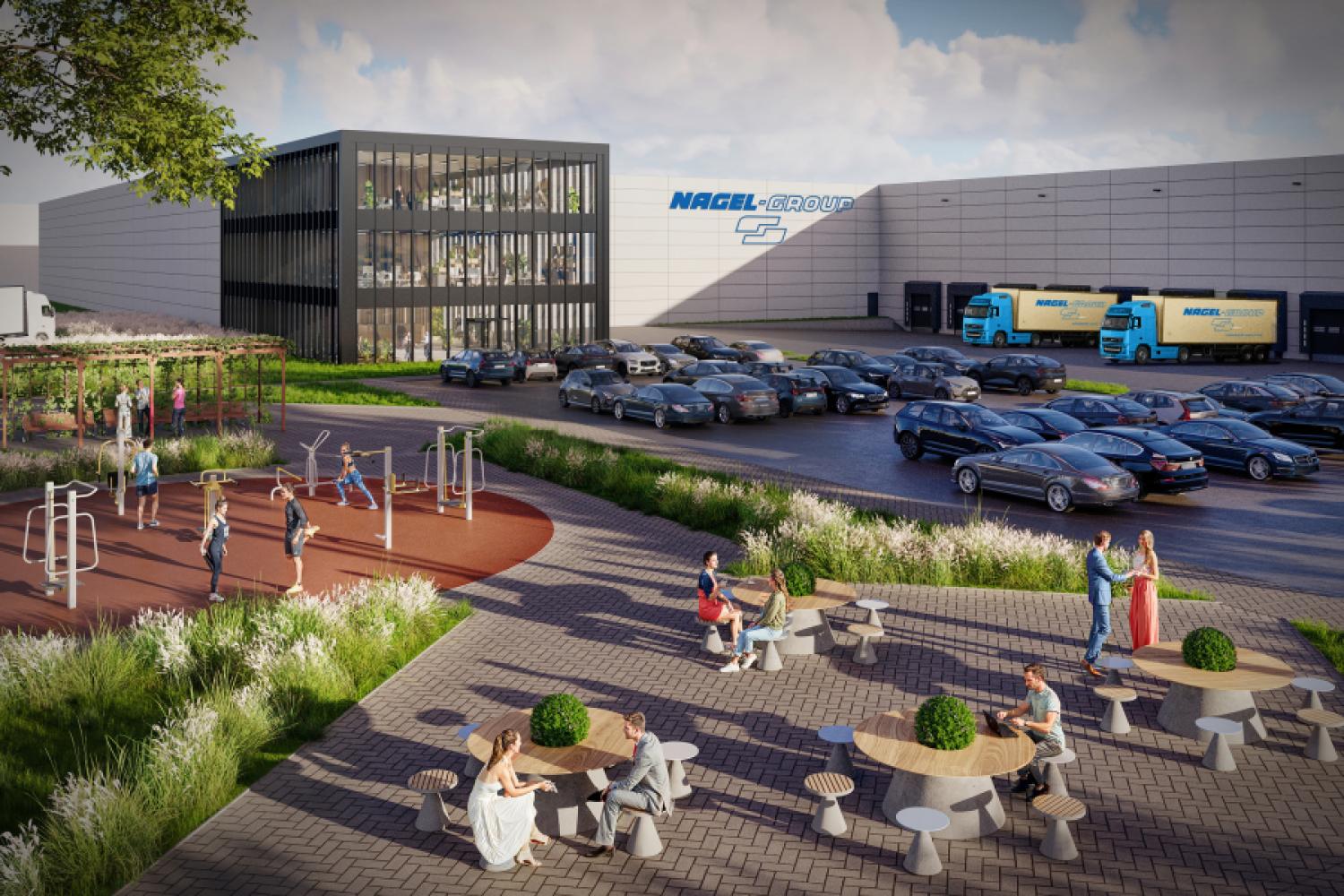
The new terminal is located on a 25,000 square meter site previously used by DHL Post & Package. In recent months, it has been extensively modernized and adapted to the requirements of less-than-truckload traffic.
The approximately 6,200 square meter transshipment hall, which includes 1,200 square meters of storage space and 360 square meters of office space, is intended to ensure efficient handling of less-than-truckload transports.
According to the company, 48 loading docks will in the
future handle shipments daily from various industries, including companies in consumer goods, automotive, packaging, catering equipment, musical instruments, sports goods, and aeronautics technology. The location currently employs around 40 people.
Particular attention was paid to the sustainable equipment of the new terminal. In addition to the conversion to LED lighting, additional office spaces were created, a modern video and access control system was installed, and a charging infrastructure for cars was built. Additionally, a photovoltaic system is planned to contribute to self-supply in the