LOGISTRA: How is SOLUTRANS (18–22 November) positioned in the international trade fair circuit?
Guillaume Schaeffer: SOLUTRANS has established itself as one of the world's leading trade fairs for commercial vehicles. It is the only event in Europe that brings together the entire industry – manufacturers, body builders, suppliers, shippers and operators – around the transport and logistics solutions of tomorrow. In 2023 we welcomed over 1,100 exhibitors and brands as well as around 64,000 trade visitors, of whom one third were international participants. The 2025 edition, which will take place from 18 to 22 November at Lyon Eurexpo, promises to be even more international – with the announced participation of over 30 manufacturers of trucks and light commercial vehicles.
What highlights does the 2025 edition offer?
GS: This edition is guided by three central themes: the energy transition, the digital revolution and new European regulations. Highlights include:
- The test site “Road Testing Village,” where visitors can try out the latest vehicle generations themselves.
- The “Hydrogen Village,” a real showcase for hydrogen solutions
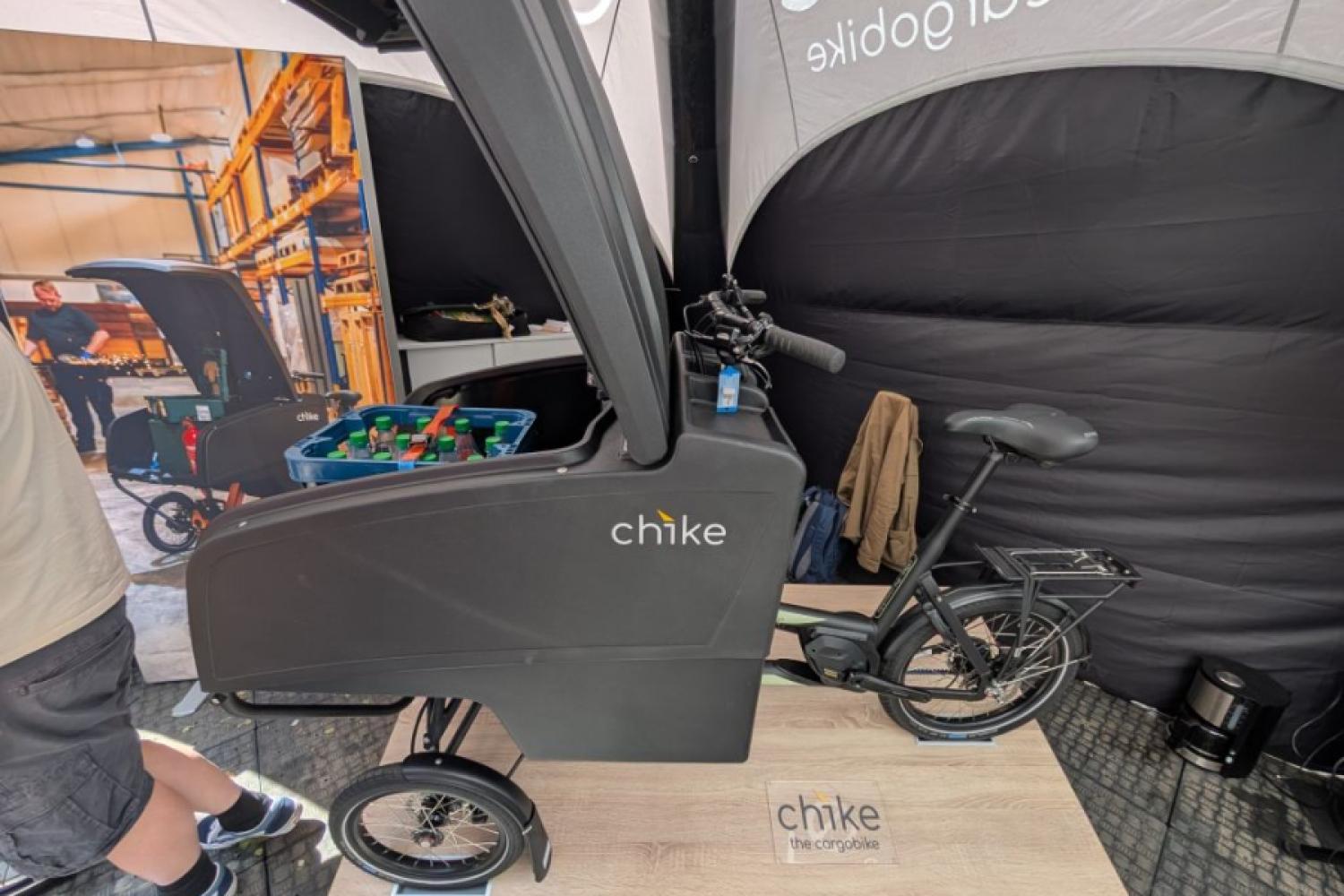
- The Cargo Bike Zone, dedicated to cargo bikes and urban logistics on the last mile.
Another new feature this year is the Thursday evening session, with the trade fair staying open until 10 p.m.—an opportunity to extend the visit in a convivial atmosphere and to promote exchange among professionals. Not to be forgotten are the awarding of the international prizes (Truck, Van and Pick-up of the Year) as well as an extensive conference program with French and international experts.
The awards for the International Van and Pick-up of the Year will also be
awarded. What role do these awards play for the show?
GS: That is a highlight of the event. The prizes will be presented as part of the festive gala dinner before 1,400 guests. They are eagerly anticipated by the industry, as they highlight the most important advances in the areas of safety, performance and the environment, and give the winners exceptional visibility. Above all, they fit perfectly with our aim of making SOLUTRANS a thought leader and trendsetter in the industry – a place where the future of the commercial vehicle sector is shaped.
Decarbonization is the central theme of this edition. How would you assess the industry's progress? Are the Paris Agreement goals realistic?
GS: The industry has clearly accelerated its transformation process: zero-emission vehicles are gaining significance, alternative powertrains are becoming more numerous, and manufacturers are investing massively. But the pace must accelerate further. The Paris Agreement goals are achievable, but only with strong joint commitment—that is, investments in infrastructure, harmonization of regulations and economic support for transport companies. At the trade show, the actual progress of this transformation can be clearly seen.
Do light electric vehicles or e-cargo bikes play a relevant role at the trade show?
GS: Yes, more than ever! Cargo bikes are now a fixed component of urban logistics. We will dedicate their own area with demonstrations, test drives and user experiences. For light commercial vehicles, most manufacturers will present their electrified or hybrid model ranges. SOLUTRANS sees itself as a mirror of the entire logistics chain—from cargo bike to trailer.
Are heavy-duty trucks also increasingly electric: is electric
long-haul transport on the horizon?
GS: The electrification of long-haul transport is no longer utopian. The first fleets are already in operation, and progress in range and charging infrastructure is substantial. Yet it will take several more years before a comprehensive rollout is achieved. In the short term we will rather see a coexistence of different technologies: electric, hydrogen, biogas and even synthetic fuels. The trade show will clearly showcase this diversity of solutions – a proof that decarbonization of road freight transport cannot be achieved by a single path.
What can trailers and bodies contribute to decarbonization or for greater efficiency?
GS: They play a central role! Body builders and trailer manufacturers are developing innovative solutions in lightweight materials, aerodynamics, thermal management and energy recovery. A lighter or more aerodynamically optimized trailer can significantly reduce the fuel consumption of the tractor unit. Some exhibitors will even showcase “active” trailers—with batteries or electric drive systems that can supply their own energy.
Also with components, electrification is increasingly central: cooling units, auxiliary drives, etc. What does the show offer here?
GS: We will see a new generation of electric refrigeration units, electrified auxiliary drives and highly efficient supplementary systems. Electrification is no longer limited to the main drive—it now extends to all vehicle functions. This technological integration will be clearly visible on the suppliers' stands.
Is there a conference program or discussion panels in addition to the trade show?
GS: Yes, we have built the conference program around the concrete challenges of the industry: decarbonization, cybersecurity, regulatory developments, retrofit solutions, urban logistics and digitalization. Each topic
was selected with a view to the current changes in the industry – with the aim of providing attendees with concrete orientation and actionable approaches. The plenary sessions bring together leading European players to think about a common roadmap for the future. These are real strategic exchange moments that accompany the transformation of the industry. The complete conference program can be found on our website.
The transport transition in Germany is stalling, in France progress is faster especially in cities like Paris or Lyon: what makes France different or better?
GS: France has gained an advantage thanks to more determined public policy – thanks to purchase incentives, a charging infrastructure plan and the introduction of low-emission zones in major cities such as Paris and Lyon. The French municipalities also actively promote new forms of urban logistics, such as cargo bikes or electric vehicles. Germany remains a strong industrial nation, but its transformation is hindered by regulatory hurdles and a less uniform infrastructure.
Three reasons you should absolutely attend SOLUTRANS 2025?
GS: First, to discover worldwide innovations in the commercial vehicle and transport sectors and to test the vehicles of tomorrow firsthand. Second, to meet the leading players in the industry and to develop the international network. And third, to experience the energy transition in the transport sector up close – through specialist conferences, live demonstrations and topic areas. In short: SOLUTRANS 2025 will be the European meeting point for climate-friendly and intelligent transport. We look forward to welcoming you from 18 to 22 November at Lyon Eurexpo. Registration is open – secure your visitor ticket