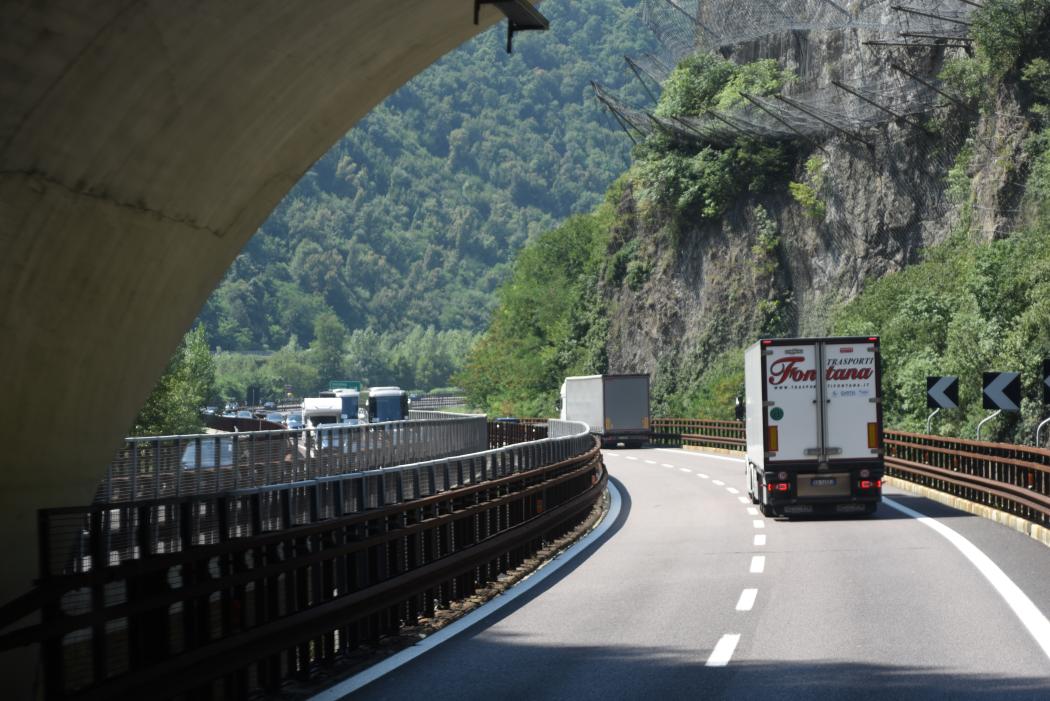
In its weekly market observation, the analysis portal Freight Perspectives today examined the latest developments in Italy's road freight transport. This time, the focus is on the impact of the Ferragosto holiday in mid-August on the spot market. Previous experiences show that during this period there are often significant price movements.
Christian Dolderer, senior analyst at the Trimble subsidiary Transporeon, presents the results in a market report. He notes that there are three typical price peaks during the year: at Easter, around Ferragosto, and at the end of the year.
“Ferragosto falls in a period when many plants close and freight forwarders limit their operations. This regularly leads to bottlenecks,” explained Dolderer.
Development of prices in domestic and international markets
Transporeon data
show that spot prices in international transport involving Italy fluctuate much more strongly than in domestic transport. In particular, traffic to Germany, France, and Poland were affected by price jumps according to the analysis. Compared with the average value of 2024, outbound spot prices this year have so far been 8.4 percent higher.
A look at the more recent past illustrates the trend. According to the analysts, international spot prices fell in 2023 compared with 2021 by ten percent at first. In 2024 the market recovered again, before another pronounced rise followed in 2025.
Also in the domestic market, an upward trend can be seen. According to the information, prices there are currently 2.5 percent above the previous year's average. Unlike international
traffic, volatility is lower.
Infrastructure and capacity constraints
Besides the seasonal effect of the holiday, other factors contributed to bottlenecks. Transporeon points to restrictions in transalpine traffic caused by construction sites as well as damage to bridges, tunnels and roads. This situation worsened the already tight availability of transport capacity.
Another signal of the strained situation is provided by the development of rejection rates. Freight forwarders rejected 22.8 percent more transport orders than in the previous year. According to Transporeon, this reflects the reluctance of many companies to take on additional trips.
Possible actions for shippers and freight forwarders
For shippers, the situation means that they can secure transports on short notice only at higher prices.
“Companies that rely on urgent transports
should plan alternative strategies,” according to Dolderer’s recommendation.
This includes the use of intermodal solutions as well as expedited order placement.
According to Transporeon, these measures cannot fully offset the effects of bottlenecks, but they can mitigate them. The market report also notes that spot prices in the Italian traffic are likely to remain at a high level beyond the summer.
Outlook for 2026
The analysts expect that the currently high price level will not fall in the near term. Rather, one should expect that spot prices will remain above the average again next year, especially in the case of unforeseen transport demand. For freight transport companies in Europe, this means that planning certainty will remain limited and flexible capacity management will