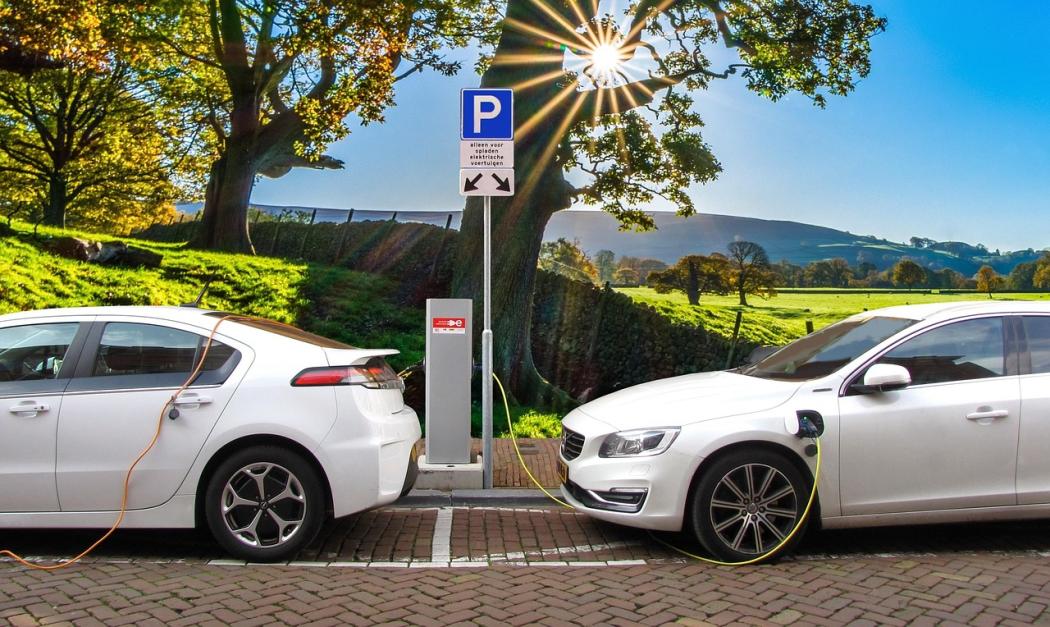
The expansion of public charging infrastructure in Germany has slowed down. This is shown by the current E-charging network ranking of the Association of the Automotive Industry (VDA), which was presented in Berlin on 4 November 2025. Accordingly, the ratio of electric vehicles to charging points remained almost unchanged compared with the previous year. Despite rising vehicle numbers, the expansion of charging points stagnates, which, according to the association, highlights the need for action in expanding the infrastructure.
Ratio of electric vehicles to charging points stagnates
As of 1 July 2025, nationwide 172,150 publicly accessible charging points were registered according to the VDA, including 40,777 fast charging points. At the same time, 2,877,051 electric vehicles, including battery-electric and plug-in hybrid vehicles, were registered. On average, 17 vehicles per charging point. In the previous year, the value was 17.3. The ratio has thus improved only marginally.
In the year-on-year comparison, the number of publicly accessible charging
points rose by 29,357. In the previous survey period, the increase had been around 45,000 charging points. The slowed pace of expansion is also evident when looking at the fast-charging points. The number of fast-charging points increased by 10,729 to a total of 40,777. With this, their increase stood at 36 percent, while the increase in standard charging points was 17 percent.
Regional increases vary
The number of charging points rose particularly strongly in the big cities. Berlin recorded 991 new charging points, Hamburg 735 and Stuttgart 646, according to the VDA. At the state level, Mecklenburg-Vorpommern and Thuringia have the best ratio with 11.7 electric vehicles per charging point each. Saxony follows in third place. In Bavaria, the value is 15.9 vehicles per charging point.
In the overall ranking of the so-called T-value, which describes the ratio of vehicles to charging points, Heilbronn leads the ranking. Here, 4.8 electric vehicles share one charging point.
Emden and the Oder-Spree district occupy the second and third places.
Fast-charging infrastructure evaluated separately for the first time
For the first time in the VDA E-charging network ranking, fast-charging infrastructure at the municipal level was also examined. The S-value, which describes the ratio of vehicles to fast-charging points, is decisive here. The Saale-Orla-Kreis district in Thuringia leads here, followed by Gera and Zweibrücken.
On average nationwide, 71 electric vehicles share one fast-charging point. In the previous year, it was 82. The largest absolute increases in fast-charging points were recorded in Cologne with 215, Berlin with 205 and Hamburg with 178 new charging points. In the populous state of North Rhine-Westphalia, 2,226 fast-charging points were added compared with the last evaluation, the most.
Regional differences and gaps in the network
According to the VDA, 32 percent of all municipalities in Germany still have no publicly accessible charging point. About two-thirds of municipalities have no fast-charging
point. The average charging power per electric vehicle rose from 2.1 to 2.4 kilowatts, but has stagnated since the start of the year. The association points out that the expansion of charging infrastructure in terms of capacity is currently progressing at about the same pace as the ramp-up of new EV registrations.
VDA calls for accelerated grid expansion
In view of the stagnating development, the VDA calls for an acceleration of planning and approval procedures. For the expansion of charging infrastructure, powerful electricity networks are necessary, the association says. Only with proactive expansion of the grids can the rising demand for charging power be met.
The E-charging network ranking is based on data from the Federal Network Agency and the Federal Motor Transport Authority. It compares charging and vehicle numbers at the level of districts, cities and states and evaluates them in several categories, including the density, availability and performance of the charging infrastructure. (av)