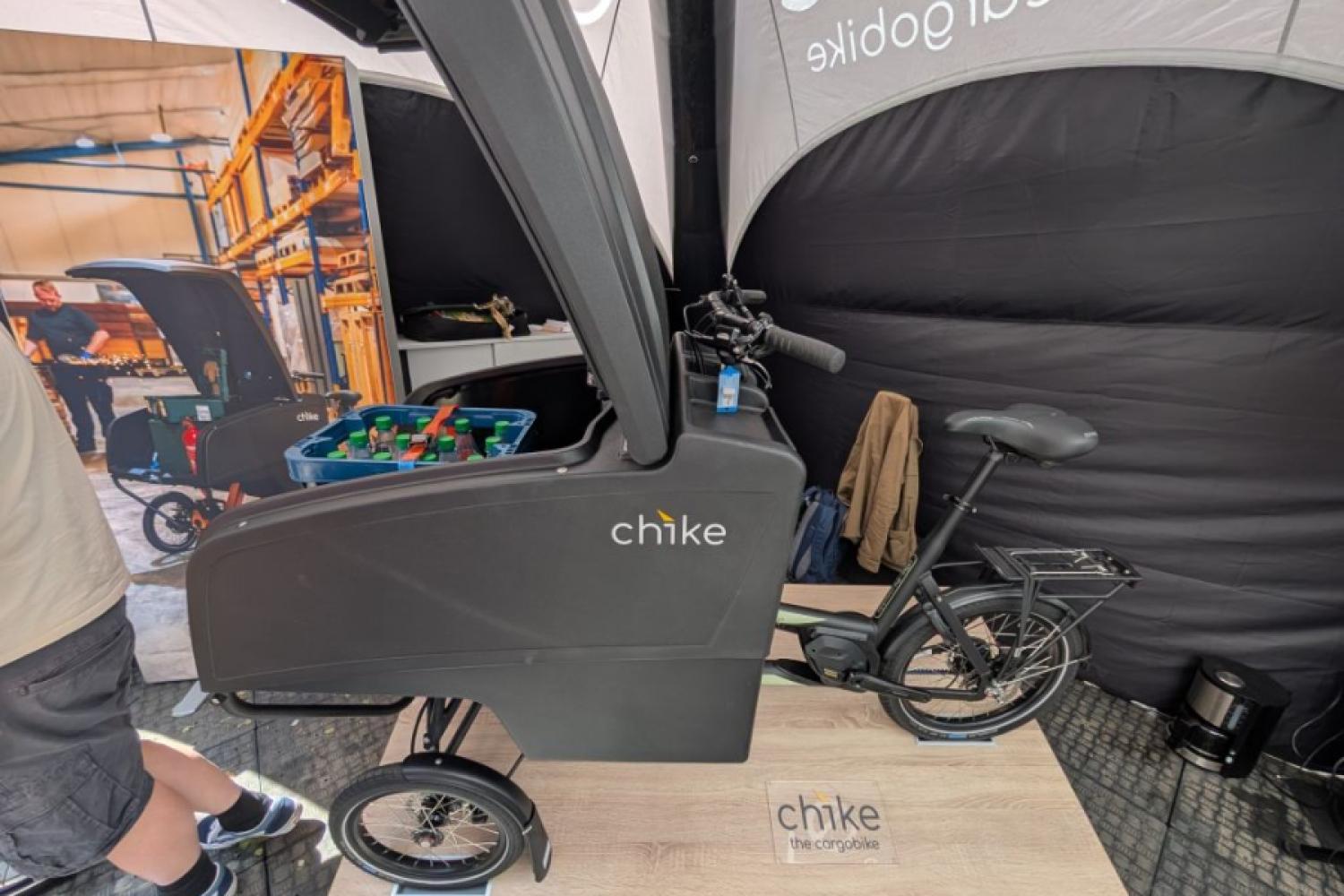
On July 29, the new municipal bike logistics hub at the Paketposthalle in Munich began its first tests in logistics operations with cargo bikes. Covering an area of 2,000 square meters, it offers large storage areas for pallet goods, refrigerated and standard logistics, a workshop for service bicycles, a lounge, and a showroom, announced the Steinbeis Europa Zentrum as a project partner of the EU project "metCAZZE" on August 14. All types of cargo bikes come and go there to deliver ordered goods, chilled food, medications, and more throughout the city.
The new hub is Munich’s second municipal logistics center for bike-based deliveries and is still under development. It is intended to become Germany's largest center for deliveries and services by cargo bike. In the interim, spaces on the Paketposthalle site on
Arnulfstraße are being used until the area is newly redeveloped. The first bike logistics hub opened two years ago at the Viehhof and has been experiencing strong demand since then. The Mobility Department is now implementing a second, ten times larger site in collaboration with the business sector.
"Things often get tight in downtown Munich," said Mayor Dieter Reiter during a walkthrough. "A cargo bike gets through quicker, can be stopped more easily for deliveries, and doesn’t have to park in the second row."
He is pleased that Munich can be a pioneer here and that they, together with the business community, were able to implement their needs and wishes.
Munich, along with Amsterdam, Limassol, and Tampere, is a pioneer city in the EU project metaCCAZE. The EU is promoting the introduction
of intelligent systems with the project and connects electric, automated, and networked mobility and infrastructures with the application of transferable and innovative technologies, including automated charging, AI-based real-time planning for autonomous fleets, and low-emission traffic management.
The pilot phase has been underway since June 2025 with the first companies on site. More major logistics providers are expected to follow soon. Current users are Dachser Food Logistics, GLS, and Pacflix. Additionally, the Munich company B4B Logistics is represented with its expertise. As a project partner, it supported the Mobility Department in the planning and conception of the hub and operates the workshop and the showroom on site – an additional offer especially for local crafts and small businesses: Different vehicle models from renowned manufacturers can be tested there, while the workshop offers fast
and reliable repairs and maintenance for work bicycles. According to the Steinbeis Europa Zentrum, these offerings are crucial to establish cargo bikes as a real alternative to company vehicles.
In Germany, the sales in the bike logistics sector have steadily grown in recent years, reaching around 190 million euros in 2024. Cargo bikes covered 8.5 million kilometers and saved 2,200 tons of CO₂. The industry primarily supports local and regional companies: 90 percent of businesses operate in a single city or region, only 10 percent operate in several areas or run nationwide networks. At the municipal bike logistics hub at the Viehhof, approximately 260,000 deliveries are conducted annually, saving about 8,000 hours of stationary time in street space compared to conventional delivery methods. On average, 15 cargo bikes can replace about ten